LANGUAGE
Bringing artistic practice into dialogue with philosophy, cognitive science and technological research, the line delves into language as an artistic medium, a cognitive process, a political instrument and a relational practice, opening new possibilities for translation, interpretation and collective imagination...
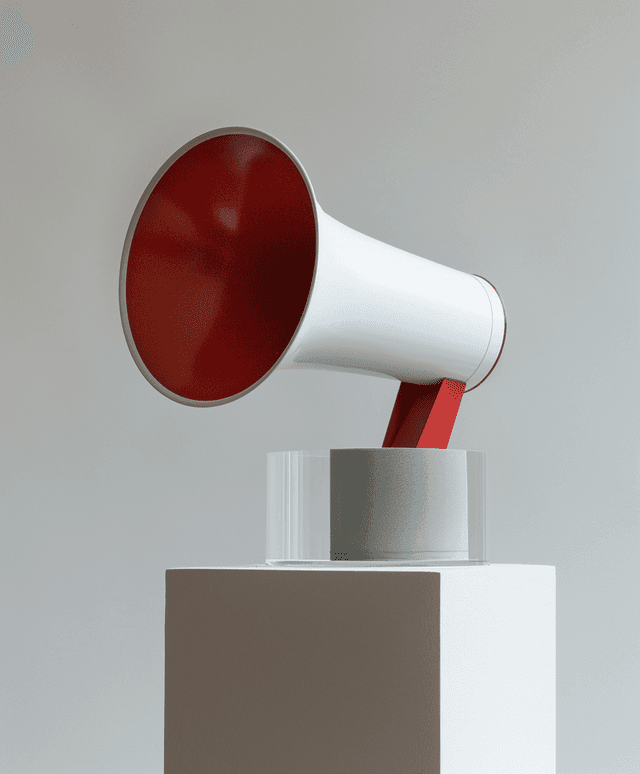
This line critically explores the centrality of language within contemporary art and curating, tracing its transformation from a singular authorial gesture into a dynamic, multifaceted creative force and a space of experimentation and contestation. Moving beyond traditional notions of curatorial authorship and writing as primarily critical or descriptive practices, it investigates the mechanisms through which language produces meaning, organises perception, mediates relations and shapes the conditions under which knowledge becomes communicable. Language is approached both as a plastic material and as an infrastructure of thought and social interaction, capable of connecting different forms of experience but also of establishing categories, hierarchies and limits of intelligibility.
Professors

Bogna Burska
Bogna Burska, a visual artist using many forms of expression and playwrite, currently a professor at the Faculty of Artistic Research and Curatorial Studies at the Academy of Fine Arts in Warsaw. From 2006 to 2024, she worked in the Intermedia Department at the Academy of Fine Arts in Gdańsk. Her works address themes of physicality, memory and emotion, often drawing from social narratives and visual pop-culture clichés. She juxtaposes what is beautiful with what is widely considered ugly, revolting or rejected. Blood-red colour is a recurring motif in her work: installations immersed in blood-red paint and red paintings. Her practice is often described as a meeting point between critical art and aesthetic inquiry. For many years, she also worked with found footage, examining the mechanisms through which contemporary narratives are produced and represented. She later returned to painting, which took on a new, organic and delicate form. She is the author of Nest, The End of Violence (with Magda Mosiewicz), Revolt of the Deaf. Renewal, and other texts presented in art galleries and theatre spaces. As of late, she has mainly been working with themes of communication and structures of mutual understanding in changing ecosystems. She exhibits in Poland and abroad; her work combines an artistic perspective with research and teaching. In 2006 together with Daniel Kotowski, she represents Poland at the Polish Pavilion at the 61st International Art Exhibition – La Biennale di Venezia.
Daniel Kotowski
Daniel Kotowski, artist and performer. He works with video, installation, photography, and objects, directs performances, and initiates social processes. He graduated from the Academy of Fine Arts in Warsaw (2018) and the Polish-Japanese Academy of Information Technology in Warsaw (2016). He is currently completing his PhD at the Academy of Fine Arts in Gdańsk. He was nominated for the Paszport Polityki Award (2024) and received artistic scholarships from the City of Warsaw (2025) and the Polish Ministry of Culture and National Heritage (2026). In the same year, together with Bogna Burska, he represents Poland at the Polish Pavilion at the 61st International Art Exhibition – La Biennale di Venezia. His works have been presented, among others, at the Museum of Modern Art in Warsaw, Zachęta – National Gallery of Art, the Muzeum Sztuki in Łódź, Studio Theatre in Warsaw, Pickle Bar in Berlin, and the Staatliche Kunstsammlungen Dresden.

Sophie Scott
Professor Sophie Scott FMedSci FBA is Director of the Institute for Cognitive Neuroscience, and Head of the Speech Communications Group. She did her PhD at UCL between 1990-1993 and worked at for the Medical Research Council between 1993-1998, before returning to UCL to take up a series of Wellcome Trust Fellowships. She was Deputy Director at the ICN from 2014-2019 when she was appointed Director. She studies the neurobiology of human vocal communication, from speech and sound to social interactions and non verbal emotional expressions, such as laughter. She is an accomplished presenter, moderator and host, having given talks at school prize-givings and been a master of ceremonies for a British Science Association dinners. She was the 2017 Royal Institution Christmas Lecturer and she was awarded the Royal Society’s Michael Faraday prize and lecture in 2021. Sophie has appeared on The One Show (BBC1) and Sunday Brunch (C4) Horizon (BBC2), David Baddiel: Social Media, Anger and Us (BBC2), and she has presented her work on Mary Beard’s Inside Culture Show (BBC2).

Annelyse Gelman
Annelyse Gelman’s practice in expanded poetics blends cinematic, theatrical, and empirical-research traditions to explore intimacy, vulnerability, and interdependence. Alongside short films, pop music, performances, and installations, Gelman is the author of the award-winning book-length poem Vexations (University of Chicago Press, 2023)—a surreal meditation on social and economic collapse, nonhuman intelligence, and the limits of empathy, structured around Erik Satie’s long-duration composition for solo piano—as well as the poetry collection Everyone I Love Is a Stranger to Someone (Write Bloody, 2014) and the EP About Repulsion (Fonograf Editions, 2019). Her work has appeared in The New Yorker, BOMB Magazine, Harper’s Magazine, The Iowa Review, American Poetry Review, and elsewhere. She is the founding editor of the digital publishing platform Midst (www.midst.press), a software tool and online resource library dedicated to showcasing the diverse writing and editing processes of contemporary poets, produced in collaboration with software developers Juliet Shafto and Jason Gillis-Grier. She holds an MFA from the Michener Center for Writers.

Sandra Laugier
Sandra Laugier is Professor of Philosophy at Université Paris 1 Panthéon-Sorbonne. Her research has been central to the contemporary development of ordinary language philosophy in France, particularly through her work on Wittgenstein, J. L. Austin and Stanley Cavell. Across philosophy of language, ethics of care, political thought and popular culture, she has examined voice, expression, forms of life and the ways shared meanings are produced through everyday practices. Her work connects linguistic experience to questions of democracy, vulnerability and attention to what ordinarily remains unnoticed.

Paco Calvo
Paco Calvo is Professor of Philosophy of Science at the University of Murcia, Spain, and founder and director of the Minimal Intelligence Laboratory (MINT Lab), an interdisciplinary research environment devoted to understanding intelligence beyond brains and nervous systems. His work brings together philosophy, plant science, cognitive science, ecological psychology, AI and bio-inspired robotics to explore how plants perceive, learn, anticipate and act in their environments. A distinctive strand of Calvo’s work is his effort to build bridges between science, philosophy and the arts. At MINT Lab, techniques such as time-lapse photography make the normally invisible timescale of plant movement perceptible, turning plant growth and behaviour into both an experimental object and a powerful visual medium. His collaborations and public work have extended into art-science residencies, biennales, festivals, documentary film and experimental workshops concerned with non-human agency, perception and alternative forms of intelligence. He has participated in programmes including Ars Electronica, MESH Festival for Art and Technology, and the Diriyah Biennale Foundation. He is the author of Planta Sapiens: The New Science of Plant Intelligence (W. W. Norton, 2023, with Natalie Lawrence), which uses plants as a provocative starting point for rethinking intelligence, agency and our relationship with the living world.
Subscribe to the newsletter