Venues
Prime Produce Apprentice Cooperative
Lead by


from Sep 25 to Aug 25
Prime Produce Apprentice Cooperative operates a grassroots, cooperatively-run member space in Hell's Kitchen, New York. This is a place where friends, family, and neighbors cultivate the craft of community service.
Wikimedia New York City
Lead by
.png&w=256&q=75)

from Sep 25 to Sep 25
Wikimedia NYC is a 501(c)(3) non-profit organization and local Wikimedia chapter that brings New York together to share in a richer and more representative free knowledge ecosystem. Wikimedia NYC is committed to building a Wikipedia, and the content it holds as democratic and diverse as the New York City subway and to partnering with libraries, museums, organizations, and educational institutions that share our vision in providing access to free knowledge.
Cybernetics Library
Lead by
.png&w=256&q=75)
from Sep 25 to Sep 25
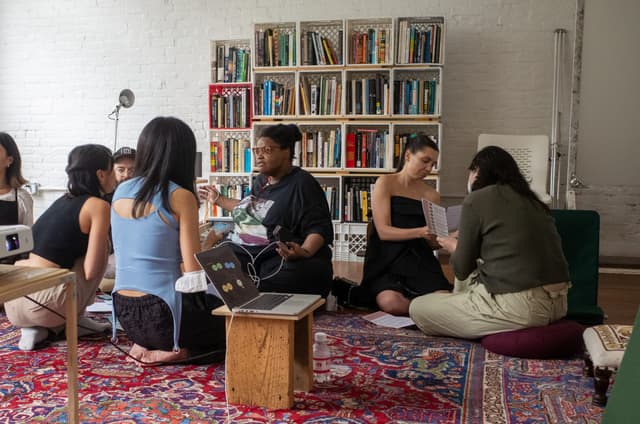
The Cybernetics Library is an artist-run browsing library and practice collective exploring cybernetics in the expanded field, and the reciprocal embeddedness of techno-social systems and contemporary society. The Library resides at Prime Produce in Hell's Kitchen, New York.
Gudskul
Lead by

from Sep 26 to Sep 26
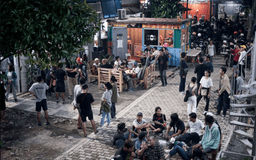
Gudskul Ekosistem consists of many elements: artists, curators, art writers, managers, researchers, musicians, directors, architects, cooks, artistic designers, designers, fashion designers, street artists and individuals with various other expertise. This variety makes Gudskul an affluent and dynamic ecosystem. Gudskul also houses a multitude of collectives with differing practices and artistic mediums: installation, archive, video, sound, performance, media art, public participation, printmaking, graphic design, education, etc. This variegated bunch also enrich the issues and involved parties in many collaborative projects, socially, politically, culturally, economically, environmentally or even educationally.
Address:
Jl Durian Raya no.30A
Jagakarsa, South Jakarta
Sea World Culture and Arts Center (SWCAC)
Lead by

from Sep 26 to Sep 26
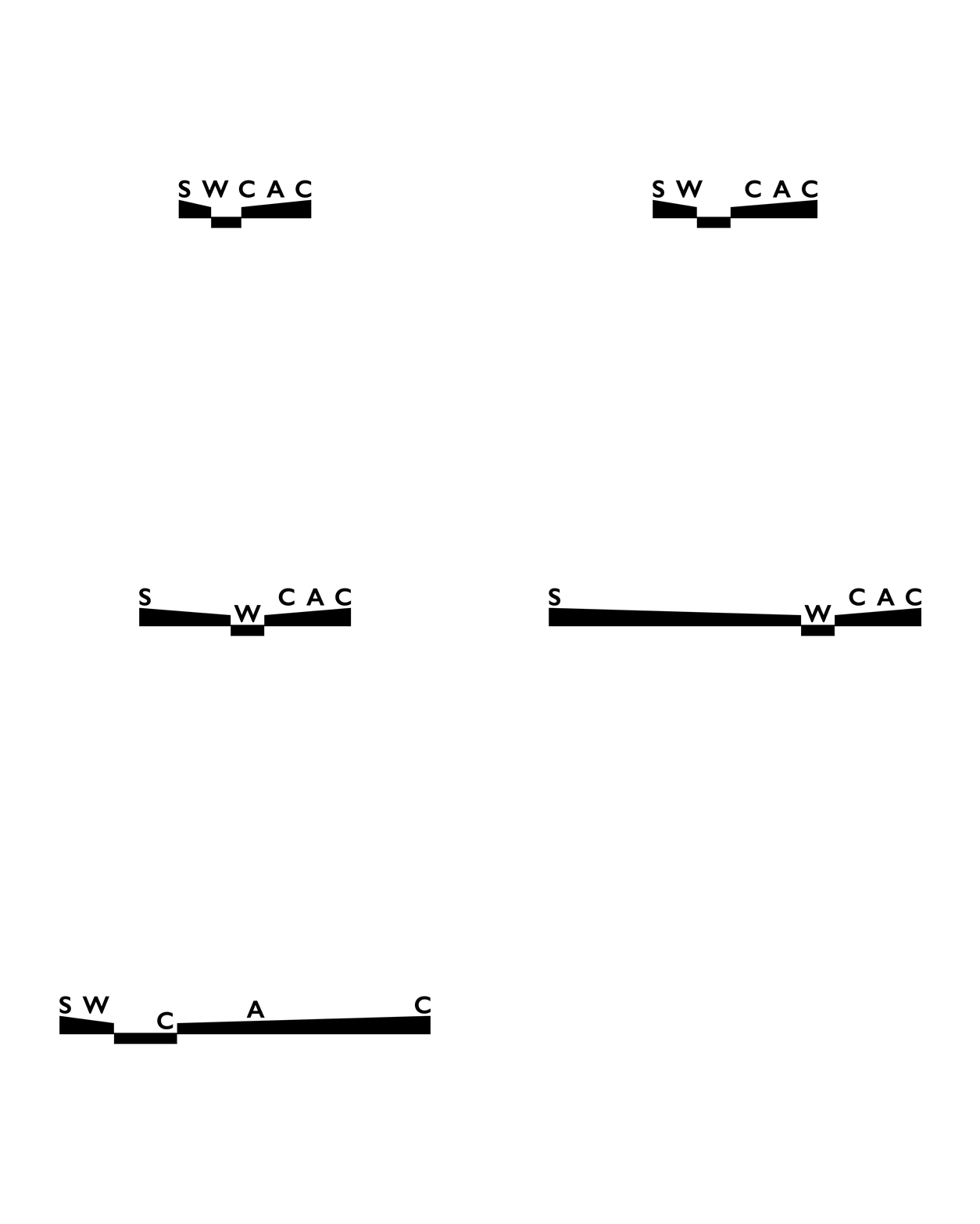
Sea World Culture and Arts Center (SWCAC) is located in Shekou, Shenzhen. As China Merchants Shekou’s first innovative cultural complex, SWCAC brings together exhibitions, performances, placemaking, and art-related commercial activities, with the aim of continuously creating distinctive cultural and lifestyle experiences for the public.
SWCAC is the only project in China designed by Pritzker Prize-winning architect Fumihiko Maki. Through an architectural approach that integrates the building with its urban landscape, the center offers a unique threefold perspective connecting mountain, sea, and city.
Since opening in December 2017, SWCAC has become an important cultural landmark in the Guangdong–Hong Kong–Macao Greater Bay Area. It has been named Lonely Planet’s top cultural destination in Shenzhen and recognized by TIME as one of the World’s Greatest Places.
Over the past eight years, SWCAC has presented 324 exhibitions, 769 performances, and 2,010 events. Its community programmes have engaged more than one million participants, while the center has welcomed over 13.91 million visitors in total.
SWCAC MEMBERSHIP
Conceived by Fumihiko Maki as an architectural composition embracing the threefold perspectives of mountain, sea, and city, Sea World Culture and Arts Center (SWCAC) has always sought to extend beyond the boundaries of physical space and create a shared environment where cultural and humanistic values can flourish.
The SWCAC Members’ Space serves as a platform for deeper engagement with local culture. Through a curated programme of activities focusing on the history of Shenzhen and Shekou, as well as design, architecture, art, and urban development, members are not simply participants, but are invited to become documenters, storytellers, and even co-creators of local narratives.
Designed for a creative community passionate about art and culture, SWCAC Membership offers a distinctive cultural lifestyle experience, including access to an exclusive members’ space, free admission to exhibitions throughout the year, complimentary members-only programmes, exclusive art merchandise, and other special membership benefits.
Untitled Space
Lead by

from Sep 26 to Sep 26
Untitled Space is a space in Kyojima dedicated to various artistic projects, where Fanny Fontaine and Rafael A. Balboa have been actively involved over time. It hosts transdisciplinary cultural events across literature, art, and architecture — curated by Fanny Fontaine around the idea of drifting: fluid identity and spatial memory.
Address:
3 Chome-13-7 Kyojima, Sumida City, Tokyo 131-0046
https://maps.app.goo.gl/ZhthcQ67z5FSdnJNA
Écomusée Tata Somba
Lead by

from Sep 26 to Sep 26
The Écomusée Tata Somba, opened in March 2021 in Tanguiéta (Atacora department, 25 km from Pendjari National Park), is West Africa's first ecological museum. Dedicated to the architecture of the Tata Somba — the earthen fortress-dwellings of the Batammariba people, recognized as UNESCO World Heritage as part of the Koutammakou cultural landscape — it brings together the region's five traditional architectural models on a single site, safeguarding their building techniques and craftsmanship. The project links heritage conservation with ecotourism: it promotes income-generating activities for local women, the protection of endangered medicinal plants, and reforestation programs. Founded by Ibrahim Tchan and Yves Biaou with World Bank support.
Vero Stoppioni Gallery
Lead by


from Sep 26 to Sep 28
The Vero Stoppioni Gallery of Contemporary Art in Santa Sofia was inaugurated in 1990, growing out of the long tradition of the Campigna Prize, an art event founded in 1955 by the Municipality of Santa Sofia thanks to the commitment of teacher Vero Stoppioni, to whom the gallery is dedicated. Housed in an early 20th-century building, the gallery aims to connect contemporary art, experimentation, and the local territory, and it preserves works collected over the many editions of the Prize.
The collection, initially curated by Fabio Cavallucci and today by Veruska Eneidi, includes paintings and sculptures by prominent Italian and international artists from the post-war period to the present. Among them are Mattia Moreni—who holds a special place in the gallery—Pompilio Mandelli, Fabrizio Plessi, Francesco Somaini, Giovanni Korompay, Alberto Sughi, and Eugène Berman, along with many Romagna-based artists who highlight the richness of the regional art scene.
A distinctive feature of the gallery is its strong relationship with the surrounding landscape: the Campigna Prize also gave rise to an open-air sculpture park that stretches along the Bidente river valley from Santa Sofia to Capaccio, featuring environmental artworks as metaphors of the relationship between humanity and nature.
Today, the gallery continues to host temporary exhibitions, monographic shows, and tributes to significant figures of the 20th century, weaving contemporary art into the cultural fabric of the area and establishing Santa Sofia as a reference point for those interested in the development of modern and contemporary art in Italy.
See Also
2025 | International Forum on the Sustainability of Culture
The Forum is a global initiative dedicated to rethinking the role of cultural institutions in building sustainable futures.