INSTITUTING
Dopo una fase di contrapposizione, sviluppatasi alla fine del Novecento con l’affermazione del curatore indipendente e la sua critica all’autorità istituzionale, la pratica curatoriale è tornata più recentemente a operare all’interno delle istituzioni, assumendo ruoli complessi che rendono sempre meno netta la distinzione tra autonomia e appartenenza...

Questo passaggio si collega alle teorie dell’alter-istituzionalità e del New Institutionalism, secondo cui i curatori possono contestare, trasformare e al tempo stesso collaborare con le istituzioni, riattivandone la funzione sociale e culturale. Senza collocarsi in una posizione di rifiuto né di piena assimilazione, la curatela contemporanea mette in atto strategie capaci di destabilizzare e rinnovare le logiche istituzionali, aprendo spazi dinamici di negoziazione e sperimentazione che superano i paradigmi museologici tradizionali. Instituting indica dunque lo studio delle istituzioni come forme sottoposte a una continua negoziazione, anziché come contenitori stabili e definiti.
Professors

Curatore, scrittore, direttore di museo
Charles Esche
Charles Esche è curatore, scrittore, direttore di museo e docente, il cui lavoro ha influenzato profondamente il dibattito sull’arte contemporanea e le pratiche istituzionali. È stato direttore del Van Abbemuseum di Eindhoven dal 2004 al 2024 e Professore di Arte Contemporanea e Curatela presso l’University of the Arts London, ed è noto per modelli espositivi sperimentali e approcci socialmente impegnati alle collezioni, alle biennali e ai programmi pubblici.

Elena Sorokina
Elena Sorokina has held key positions within major art events, notably as Associate Curator of documenta 14 (Athens/Kassel) and as Director of HISK (Higher Institute for Fine Arts) in Belgium in 2017. In 2020, she co-founded the Initiative for Practices and Visions of Radical Care. In 2022, she co-curated the Armenian Pavilion at the 59th Venice Biennale. Her curatorial practice unfolds on an international scale, within museums and art platforms such as BOZAR (Brussels), the Musée d’Art Moderne de la Ville de Paris, the Pera Museum (Istanbul), the Rudolfinum (Prague), and the Centre Pompidou (Paris). She is currently co-curating Survival Kit Festival in Riga, Latvia, entitled Arrow of the Wind: On Artists and Healers.

Curatore, editore e teorico.
Viktor Misiano
Viktor Misiano è curatore, editore e teorico. Ha curato numerose istituzioni artistiche e importanti eventi, tra cui il Pushkin National Museum of Fine Arts e il Padiglione dell’Asia Centrale alla Biennale di Venezia. È inoltre fondatore del Manifesta Journal: Journal of Contemporary Curatorship (Amsterdam). La sua ricerca si concentra principalmente sull’arte contemporanea post-sovietica e dell’Europa orientale, e sul ruolo sociale e geopolitico della pratica curatoriale.
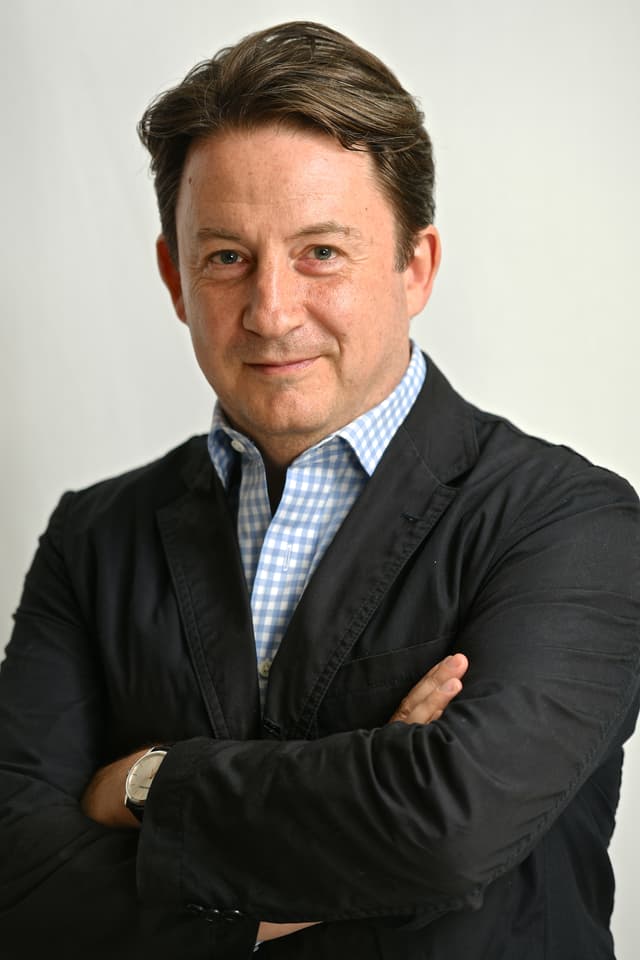
András Szántó
András Szántó, PhD, advises museums, cultural institutions, and leading brands on cultural strategy. An author and editor, his writings have appeared in The New York Times, Artforum, The Art Newspaper, and many other publications. As a cultural strategy advisor, he consults museums, foundations, cultural and educational institutions on strategic planning and new project development worldwide. He has overseen the National Arts Journalism Program at Columbia University, the Global Museum Leaders Colloquium at the Metropolitan Museum of Art, and the Museums of Tomorrow Roundtable at the Fine Arts Museums of San Francisco. Szántó, who lives in Brooklyn, has been conducting conversations with art-world leaders since the early 1990s, including as a frequent moderator of the Art Basel Conversations series. His recent books include The Future of the Museum: 28 Dialogues (2020), Imagining the Future Museum: 21 Dialogues with Architects (2022), and The Future of the Art World: 38 Dialogues (2025).

Molemo Moiloa
Molemo Moiloa lives and works in Johannesburg, and has worked in various capacities at the intersection of creative practice and community organizing. She currently works on notions of ungovernability, social infrastructures of cultural organizing, and relationships to nature. Molemo is co-director of creative sector insights and data analytics company, Andani.Africa. She is one half of the artist collaborative MADEYOULOOK, who explore everyday popular imaginaries and their modalities for knowledge production. She also co-leads the Open Restitution Africa project, an Africa-focused research platform for restitution of African heritage and co-leads the ungovernable, an experiment in communitary practice and ungovernability. Molemo was a Soros Arts Fellow 2023/24, was a Chevening Clore Fellow 2016/17, and winner of a Vita Basadi Award for 2017. MADEYOULOOK were selected artists of the South African Pavilion for the Venice Biennale 2024, were DAAD Artists-in-Berlin fellows for visual arts 2022 and Lumbung artists at documenta fifteen, 2022. They were nominees for the VLC Prize for Art and Politics 2016/17 at the New School, New York and the MTN Young Contemporaries 2012.
Curatore, critico d’arte, docente
Fabio Cavallucci
Fabio Cavallucci è il fondatore di Institution e curatore. Ha diretto diverse istituzioni culturali in Italia e all’estero. Insegna Storia dell’Arte Contemporanea all’Accademia di Belle Arti di Carrara.

Vesna Madžoski
Vesna Madžoski (PhD) is a fellow at the European Graduate School in Switzerland. She taught critical theory in the MA Artistic Research Program at the Royal Academy of Arts in The Hague and has initiated multiple international art projects. Since 2006, she has been a member of the Amsterdam-based art collective Public Space With A Roof. As a lecturer, she has delivered numerous talks and lectures on contemporary art at leading art and theory institutes in Europe and the USA. She was one of the editors of the Belgrade-based magazine Prelom. Over the past decade, her research has focused on analyzing the global art system, with a particular interest in identifying forms of control and censorship within this domain. Her PhD dissertation, titled DE CVRATORIBVS. The Dialectics of Care and Confinement (Atropos Press, 2013), examines curatorship in post-World War II Europe and the consequences of transformations in this field at both aesthetic and political levels. With a group of enthusiasts, she initiated SKVER in 2018 with the aim of preserving the recent history of Timok Region Valley in Serbia. More info: https://madzoski.synthasite.com/

Bart De Baere
From 1986 until 2001 he was second in command at the Museum of Contemporary Art in Ghent, directed by Jan Hoet, curating numerous exhibitions there, notably This is the show and the show is many things in 1994, now considered to be the first of a lineage of process driven exhibitions. He was a curator of Documenta IX in Kassel in 1992 (with Pier Luigi Tazzi, Denys Zacharopouloq and Jan Hoet as artistic director), and of projects such as Jimmie Durham - David Hammons - Pedro Cabrita Reis, in 1993, Kunsthalle Fribourg, Switzerland (with Cis Bierinckx) 'Europe', a project for 'Universalis', in 1998, Bienal de Sao Paulo, (with Maaretta Jaukkuri), A Story of the Image, in 2009, Shanghai Art Museum, National Museum of Singapore (with Paul Huvenne), 6th Moscow Biennial, in 2015, VDNH (inviting Defne Ayas and Nicolaus Schafhausen as co-curators), When Faith Moves Mountains, in 2022, Pinchuk Art Centre, Kyiv, (with Bjorn Geldhof). He was amongst the first to propose an integrated mode of presenting art, encompassing different presentation formats (cfr. 1998 “The integrated Museum”, in Stopping the Process?, NIFKA, Helsinki and 2002 “Potentiality and public space, archives as a metaphor and example for a political culture”, in Interarchive, Köln, Verlag der Buchhandlung Walther König. He has always supported the self-empowerment of diverse situations worldwide, from advising the city of Johannesburg in founding an international art biennial during the transition away from Apartheid, over having been a member of the International Advisory Board of the Soros Centers for Contemporary Art, up to chairing the advisory board of Tselinny Center of Contemporary Culture in Almaty, Kazakhstan now. From 2002 until 2025 Bart De Baere was director of M HKA in Antwerp, Belgium, an international contemporary art and visual culture museum that incorporates a film museum and the where he founded the Flemish Centre for Visual Art Archives. In 2002 he co-founded as Vice-President the association ‘Centrum voor Hedendaagse Kunst’, Brussels, which renovated the former Brewery ‘Wielemans-Ceuppens’ and turned it into the international Kunsthal Wiels. In 2012 he co-founded the European museum confederation L’Internationale. In 2021 he co-founded as vice-president the international non for profit organisation ‘L’Internationale Association’. From 2017 until 2025 he committed to CIMAM, most recently as its secretary-general, before that as the chair of CIMAM’s Museum Watch Committee, looking at situations of crisis in museums worldwide.
Subscribe to the newsletter