2026 | Culture Commons: International Forum on the Sustainability of Culture
scroll to read
from Sep 25, 2026 to Sep 26, 2026
Culture Commons: global perspectives for building a more collaborative and sustainable culture.
Following the success of its first edition, the 2026 International Forum on the Sustainability of Culture is expanding its international network and deepening its reflection on culture as shared infrastructure.
The second edition, dedicated entirely to Culture Commons, will take place on 25–26 September 2026 in a hybrid format — in person and live-streamed on YouTube and social channels.
The edition's theme, Culture Commons, also shapes how it is organised: the Forum unfolds through a distributed network, rooted in each of the territories that host it. Both days follow the same relay-style schedule, moving across the time zones of six hubs — Tokyo, Shenzhen, Tanguiéta, Jakarta, Santa Sofia, and New York — connecting them in real time, online and in person. The roundtables, made up of artists, economists, scholars, and cultural professionals, invite open participation and live questions from anywhere in the world.
A branching structure with a single aim: to put the commons to the test as a model. Are they genuinely applicable to cultural, economic, and social life? And where they are, with what practical tools? Each roundtable is conceived as a collective laboratory, tasked with posing practical questions and formulating concrete answers.
Many of the in-person events across the various venues are designed to generate social impact in the places where they unfold. At the Santa Sofia venue, the work on local engagement begun in the previous edition blossoms into a group exhibition and a closing assembly (not streamed), conceived to translate the themes discussed at the international roundtables into practice within the specific local context — one rich in grassroots community associations.
FRIDAY 25 SEPTEMBER
14.00 – 14.30
Welcome and opening of the Forum
Institutional greetings
Objectives and themes of the 2026 edition
THEME 1 · Digital Commons, Technology and Artificial Intelligence #DIGITAL_COMMONS
What commons emerge through technology, and what role can technology play in their development?
14.30 – 15.15
Michel Bauwens
Include Q&A e discussione.
15.15 – 16.30
🌍 International connection · Roundtable discussion
Online
Speakers: Aristotle Tympas, Zhanzhan Zhao, Francesco Rulli, Tom Cebic
Includes Q&A and discussion.
THEME 2 · Shared Governance and participative cultures #POWER_DISTRIBUTION
What collaborative and democratic models exist for the distribution of power?
16.30 – 17.00
Stavros Stavrides · Vision
Includes Q&A and discussion.
17.00 – 17.45
Silvia Federici · Lecture
New York
In person at Prime Produce – New York City
Includes Q&A and discussion.
17.45 – 18.30
Patricia Lannes and Roxana Fabius · Conversation
Online
Includes Q&A and discussion.
18.30 – 19.00
Massimo De Angelis · Vision
Online
19.00 – 19.40
🌍 International connection · Roundtable discussion
New York
In person at Prime Produce + Wikimedia Foundation NYC
Open to the public
Speakers: David Isaac Hecht, Bri Griffin, Gavin Marcus
Includes Q&A and discussion.
19.40 – 20.00
Gladys Tzul Tzul · Vision
Online
Includes Q&A and discussion.
20.00
Dinner at the Gallery
SATURDAY 26 SEPTEMBER
9.30 – 10.00
Laura Pando Martínez — Julie's Bicycle · Vision
Includes Q&A and discussion.
10.00 – 11.00
🌍 International connection · Roundtable discussion
Shenzhen
In person at Sea World Culture and Arts Center
Open to the public
Speakers: Cheng Ran (Martin Goya Business), Luo Sen, Tang Guanhua, Jia Rujun, Ashley Lee Wong
Includes Q&A and discussion.
11.00 – 12.15
🌍 International connection · Roundtable discussion
Tokyo
In person at Untitled Space
Open to the public
Speakers: Masaki Fujihata, Christian Dimmer, Katsuhito Okubo, Fanny Fontaine, Rafael A. Balboa, Tengyo Kura, Cléo Verstrepen, Manami Okazaki
Includes Q&A and discussion.
THEME 3 · Post-Capitalist Economies and Mutualist Models #MUTUALIST_ECONOMY
What mutualist economic structures are viable in post-capitalism?
12.15 – 13.15
🌍 International connection · Roundtable discussion
Tanguiéta (Benin)
In person at the Écomusée Tata Somba
Open to the public
Speakers: Ibrahim Tchan, Josephine Koumbeti, Vincent Offio, Guy N'Kouei
Includes Q&A and discussion.
13.15 – 14.00
Lunch break
14.00 – 15.00
🌍 International connection · Roundtable discussion
Jakarta
In person at Gudskul
Open to the public
Speakers: farid rakun (ruangrupa), Gertrude Flentge, David Bollier
Includes Q&A and discussion.
15.00 – 15.15
Clara Mattei · Vision
15.15 – 16.30
🌍 International connection · Roundtable discussion
Santa Sofia (Italy)
In person at Vero Stoppioni Contemporary Art Gallery (Santa Sofia, FC, Italy)
Open to the public
Speakers: Massimo De Angelis, Silvia Sacchetti, Keir Milburn, Kathrin Böhm, Masaki Fujihata
Includes Q&A and discussion.
16.30
End of the live stream
_______________________________________________
The following sessions are part of the community and territorial work in the Santa Sofia territory, started by Institution in the first edition of the Forum. These will not be streamed, but open to the audience in person.
17.00
Collaboration and Territorial Synergies Table · Roundtable discussion
Santa Sofia (Italy)
In person at the Vero Stoppioni Gallery of Contemporary Art
Open to the public
Includes Q&A and discussion.
19.00
Opening of the group exhibition dedicated to the Territorial Network
Santa Sofia (Italy)
In person at the Vero Stoppioni Gallery of Contemporary Art
Open to the public
_______________________________________________
The event will be streamed on institution.tv
(and on our Social Networks and YouTube channel.)

Sep 25 at 14:30 PM GMT+2
Michel Bauwens · @online · Lecture on Technology
Can technology build commons rather than concentrate power? Founder of the P2P Foundation, Bauwens has studied commons-based peer production for two decades — communities that create and collectively govern shared resources, from open software to open design. Known for "cosmo-localism," he makes an affirmative case for technology as infrastructure for cooperation.

Sep 25 at 15:15 PM GMT+2
@online · Discussion on Technology
Can AI be held in common, rather than extracted as a resource? No technology makes the tension between collective and extractive logics more visible: today's models are trained on the shared output of human culture — language, images, code, accumulated knowledge — yet the systems built from that commons are concentrated in a few hands, their compute, energy, and human-labour costs kept largely out of view.

Sep 25 at 16:30 PM GMT+2
Stavros Stavrides · @online · Vision on Governance
Stavrides opens the Governance theme from his work on thresholds, asking what shared governance really means for a cultural commons — how much structure it needs to hold together before it hardens into a new gate.

Sep 25 at 17:00 PM GMT+2
Silvia Federici · @New York · Lecture on Governance
What can a feminist reading of the commons teach us about cooperation today? Scholar, activist, and one of the most influential theorists of the commons, Federici has spent decades tracing how care, reproduction, and collective life are enclosed by capitalism — and how they might be reclaimed.

Sep 25 at 17:45 PM GMT+2
Patricia Lannes + Roxana Fabius · @New York · Dialogue on Governance
Large, established institutions carry a structural weight — hierarchy, regulation, sometimes a public mandate — that makes them slow to share: decisions travel upward and the public tends to pass through and leave. Yet these are the institutions with the most reach and resources, and what they hold is in some sense already shared, an inheritance that belongs on paper to everyone. The text asks whether a form built to conserve and instruct can be loosened enough to let a community take a real part in what it does, and how far the language of the commons actually reaches at this scale.

Sep 25 at 18:30 PM GMT+2
Massimo De Angelis · @Santa Sofia · Discussion on Governance
A commons is less a resource than something people continually do together — so what allows that doing to last?

Sep 25 at 18:30 PM GMT+2
@New York · Roundtable on Governance
How — and where — does it make sense for small cultural organisations to hold more in common? Hosted in New York across Prime Produce, the Cybernetics Library, and Wikimedia NYC, this node gathers artists and cultural practitioners for a convivial working session — a lecture by Silvia Federici, a shared lunch, and a streamed conversation reporting back to the online audience — asking not whether commoning is desirable, but under what concrete conditions it can grow.

Sep 25 at 19:40 PM GMT+2
Gladys Tzul Tzul · @online · Interview on Governance
Gladys Tzul Tzul is a Maya K'iche’ woman from Totonicapán. She is a writer and essayist. Holding a PhD in Sociology, she has conducted research in Guatemala, Honduras, El Salvador, Mexico, Ecuador, and the United States.

Sep 26 at 10:00 AM GMT+2
@Shenzhen · Roundtable on Governance
Hybrid institutions: where the cultural space is also "home" In many contemporary cities, the ways in which communities form and shared resources are established and made available reflect particular conditions shaped by contemporary life: population mobility takes millions of people far from their hometowns; a "compressed modernity" concentrates within a single generation social transformations that elsewhere might have unfolded over a century; and intense working rhythms continually encroach on personal time and private life. When "home" is elsewhere, a sense of belonging needs to be built anew in the places where people arrive.

Sep 26 at 09:30 AM GMT+2
Laura Pando · @online · Interview on Governance
Connective institutions: holding a scene together What if part of the real work of a cultural institution is not only to build or to programme, but to hold others together? These are cultural institutions in the full sense — with their own aim and their own voice — yet ones that choose to turn outward: to listen to the community that passes through them and to place themselves, in some measure, at its service, without letting go of what they are for.

Sep 26 at 11:00 AM GMT+2
@Tokyo · Roundtable on Governance
Intermediary institutions: translating between high culture and community life. Between high culture and the wider community there is often a distance: of language, of threshold, of who feels entitled to enter. Some places — ones we don't always recognise as cultural in the ordinary sense — act as intermediaries and narrow that distance: they sit at the point of passage and put back into everyday language what elsewhere stays closed within a cultivated one. They aren't made for this, yet this is where they end up working, taking in even those usually left outside culture.

Sep 26 at 12:15 PM GMT+2
@Tanguiéta · Roundtable on Economy
What if tourism could generate value without taking heritage away from the communities that make it? The Koutammakou Ecomuseum works within the living landscape of the Batammariba, where land, architecture, knowledge and livelihoods stay interconnected. A network of 15 cooperatives — mostly women, custodians of earthen-architecture knowledge — turns local resources into value and channels 20% of profits into a permanent fund for maintaining the sikien. Structured as a causerie-débat, the session asks whether museums can move beyond preserving heritage to sustaining the living systems that keep it alive.

Sep 26 at 14:00 PM GMT+2
ruangrupa · @Jakarta · Discussion on Economy
Lumbung is a working method to share resources, referring to the Indonesian agriculturally vernacular rice-barn — the surplus of a harvest gathered into a common store, and redistributed by collective decision. ruangrupa, the collective that runs this table, has carried that principle across a series of experiments in the field of culture

Sep 26 at 15:00 PM GMT+2
Clara Mattei · @online · Vision: Economy
The economy as a political choice: how to transform capitalism We take for granted that economics is a technical matter, made of neutral laws and inevitable constraints: markets know, the books must be balanced, there are no alternatives. But the categories through which we read it — growth, debt, unemployment — are not objective descriptions of the world; they contain choices about what counts, and for whom. Recognising them as political, rather than as destiny, changes what we are able to imagine.

Sep 26 at 15:00 PM GMT+2
@Santa Sofia · Roundtable on Economy
Cultural institutions largely depend on private support and national funding — and when those falter, so does their capacity to keep going. The Forum's home table in Santa Sofia gathers economists, commons researchers, ethical-finance practitioners, and voices from the art world around a mutualist question: can institutions sustain themselves through cooperatives, shared funds, and mutuals rather than dependencies that leave them precarious? It shifts the question from who pays for culture to how a community decides, together, to keep producing it — and asks how far mutualist models can carry that weight.
%2520(1).jpg&w=640&q=75)
Silvia Federici
Philosopher
Silvia Federici is a feminist activist and a renowned political theorist. One of the most important voices on the Commons.
Michel Bauwens
Founder and director of the P2P Foundation
Michel Bauwens is the founder and director of the P2P Foundation and works in collaboration with a global group of researchers in the exploration of peer production and commons-centric economics.
.jpg&w=640&q=75)
ruangrupa
curatorial collective
ruangrupa (which loosely translates as ‘a space for art’) is an artist’s initiative and collective started in Jakarta, Indonesia in 2000.
.jpg&w=640&q=75)
Gladys Tzul Tzul
Maya K'iche' sociologist
Gladys Tzul Tzul is a Maya K'iche’ woman from Totonicapán. She is a writer and essayist. Holding a PhD in Sociology, she has conducted research in Guatemala, Honduras, El Salvador, Mexico, Ecuador, and the United States.

Ibrahim Tchan
Director and co-founder of the Tata Somba Écomuseum
Ibrahim Tchan is a Beninese jurist and cultural heritage specialist. He is the director and co-founder of the Tata Somba Écomuseum—the first ecological museum in West Africa—and leads efforts to preserve the Koutammakou cultural landscape (Land of the Batammariba).
.JPG&w=640&q=75)
Clara Mattei
Economist and historian of capitalism and austerity policy
Clara E. Mattei is Professor of Economics at The University of Tulsa and Founding President of FREE: Forum for Real Economic Emancipation. She is the author of Capital Order (2022), one of the Financial Times' Ten Best Economics Books of the year, and the recent Escape from Capitalism (2026); she writes regularly for Il Fatto Quotidiano, The Guardian and Jacobin.

Massimo De Angelis
Political economist and founding editor of the web journal The Commoner
Massimo De Angelis is Professor Emeritus of Political Economy at the University of East London and the founding editor of the web journal The Commoner.

Laura Pando
Interim CEO of Julie’s Bicycle
Laura Pando Martínez, is a culture and climate expert practitioner and the Interim CEO of Julie’s Bicycle.

David Bollier
Writer and activist
David Bollier is an American activist and scholar whose work studies and promotes the commons as a paradigm for re-imagining political economy, culture, and society. Director of the Reinventing the Commons Program at the Schumacher Center for a New Economics, he is the author of more than a dozen books on the commons.

Patricia Lannes
Museum educator and community-engagement specialist
Patricia Lannes works at the intersection of museums, art, and education. Recognized as a dynamic leader in the global cultural sector and as an accomplished public speaker, she addresses the vital structural changes required to provide access to the arts and to navigate the distinct challenges and opportunities of the 21st century. She uses art, visual literacy and museums as powerful tools to engage and unite communities.

Roxana Fabius
Director of the Museo Nacional de Artes Visuales in Montevideo, Uruguay
Roxana Fabius is an Uruguayan curator and art administrator. She currently is the director of the Museo Nacional de Artes Visuales in Montevideo, Uruguay.

Stavros Stavrides
Architect and urban theorist
Stavros Stavrides, architect and activist, is Emeritus Professor at the School of Architecture, National Technical University of Athens, Greece, where he teaches postgraduate courses on the metropolitan experience of space and supervises many PhDs.

Martin Goya Business
Independent art platform
MARTIN GOYA BUSINESS was founded by artist Cheng Ran and Da Mian, as a pioneer platform that advocates for an alternative youth culture. Setting itself apart from existing art systems, it is committed to promoting and supporting the diverse practice and exploration of emerging local artists. Martin Goya Business closely aligns with today’s trend and avant-garde fashion, shaping and leading a new visual and culture scene with their unique vibe.

Kathrin Böhm
Artist
Kathrin Böhm works as an artist and organiser across interdependent realms of cultural production, including art worlds. Her organisational and spatial work supports collective forms of (re-)producing public space, reclaiming the economy for more-than-capitalist futures, and enabling a new trans-localism that acknowledges the rural. As a researcher, she contributes to the broader topics of New Economies, Cultural Democracy, Usership of Art and Commons-based World Building.
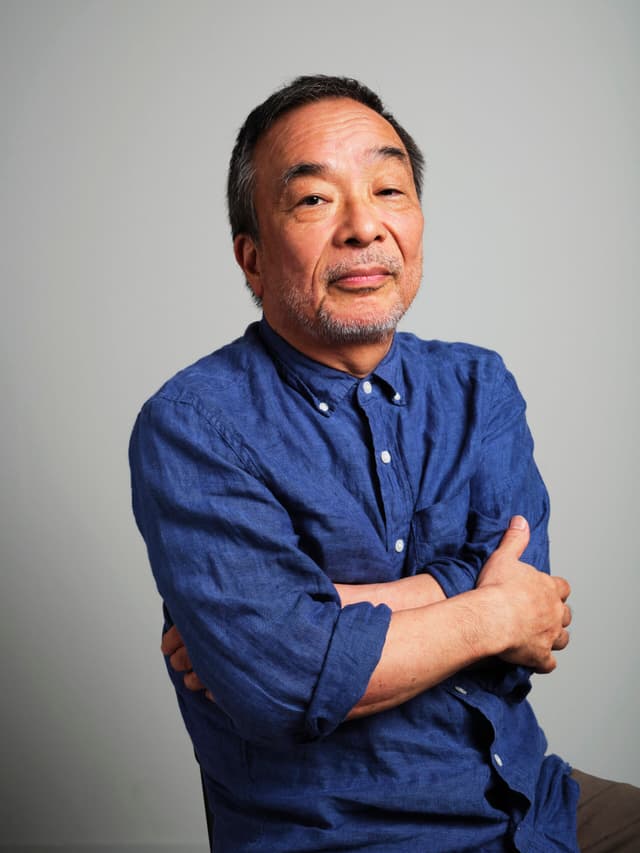
Masaki Fujihata
Media Artist
Masaki Fujihata, born in Tokyo, is one of the pioneers of Japanese new media art.
Bri Griffin
Artist and curator at rhizome.org
Bri Griffin (aka muein) is an artist and curator at rhizome.org, a non-profit focused on supporting the preservation of internet-era culture and art.

Keir Milburn
Writer, researcher, and consultant
Dr. Keir Milburn is a writer, researcher, and consultant. He has a background as an academic in political economy and organisation theory and is currently a director of the action-research think tank Abundance.

Gertrude Flentge
Cultural operator
Gertrude Flentge is a cultural operator working for the commons. She co-developed various collaborative interlocal ecosystems such as the RAIN Artists' Initiatives Network, Arts Collaboratory and Lumbung - documenta fifteen.

Cheng Ran
video artist and the co-founder of MARTIN GOYA BUSINESS
Cheng Ran, born in Inner Mongolia and currently based in Hangzhou, is a video artist and the co-founder of the artist-run space MARTIN GOYA BUSINESS. He has held a solo exhibition at the New Museum in New York, and his works have been exhibited or screened at institutions including the Sydney Opera House, Palais de Tokyo in Paris, the International Short Film Festival Oberhausen, and the Istanbul Biennial.

Zhanzhan Zhao
Assistant Professor in the School of Humanities and Social Science and the School of Artificial Intelligence at The Chinese University of Hong Kong, Shenzhen.
Zhanzhan Zhao is an Assistant Professor in the School of Humanities and Social Science and the School of Artificial Intelligence at The Chinese University of Hong Kong, Shenzhen. Her research brings together artificial intelligence, complex systems, and social science to study algorithmic governance, fairness, and collective behavior.

David Isaac Hecht
Co-Founder of The Cybernetics Library, stewarding member of the Prime Produce Apprentice Cooperative, Board Secretary for Wikimedia NYC.
David Isaac Hecht is co-Founder and co-Steward of The Cybernetics Library, a stewarding member of the Prime Produce Apprentice Cooperative, coordinates Research and Design-Build projects for Seeds to Soil, co-organizes the GROW Externships Central Appalachia Program, and is Board Secretary for Wikimedia NYC.
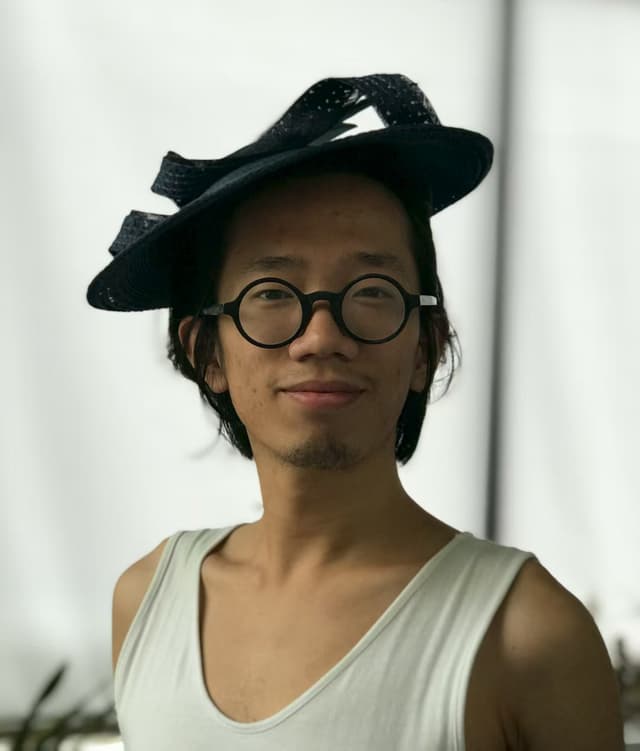
Luo Sen (Lawson)
Artist and member of 706 Youth Space
Advocate of shared-living practices, researcher and member of the 706 community

Silvia Sacchetti
Silvia Sacchetti is Full Professor of Economic Policy at the University of Trento, where she coordinates the Cives research unit — Economic Institutions and the Common Good. She collaborates with Euricse and co-edits the Journal of Entrepreneurial and Organizational Diversity; her research explores the links between social economy, cooperatives, and shared value for communities.
Silvia Sacchetti is Full Professor of Economic Policy at the University of Trento, where she coordinates the Cives research unit — Economic Institutions and the Common Good. She collaborates with Euricse and co-edits the Journal of Entrepreneurial and Organizational Diversity; her research explores the links between social economy, cooperatives, and shared value for communities.
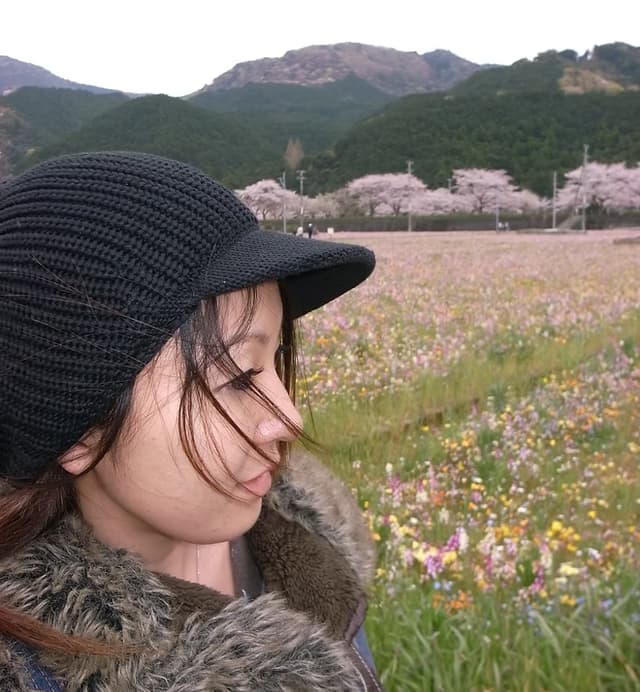
Manami Okazaki
Author and journalist
Manami Okazaki is an author and journalist. She has worked across the globe, lived in several regions and travelled to over 50 countries but now mostly focuses on Japan. She has produced 12 books (art/ photography coffee-table tomes/ visual culture collectibles) on Japanese culture, art, crafts and fashion, which have been widely acclaimed by international media. She specializes in folk culture, subcultures, crafts, popular culture, regional identity and branding, iconography, and multispecies relationships. Her long-term projects are represented in her books.
Christian Dimmer
Educator, Author, Researcher
Christian Dimmer is a Germany-born educator, author, researcher, and transition design practitioner who has been based in Tokyo for 25 years. As an Associate Professor of Transition Design & Urban Studies at Waseda University, he explores how urban systems, design practices, and public spaces can act as catalysts for positive socio-ecological transformation.

Katsuhito Okubo
Public bath and bookstore owner
In 2019, he took over the family business, the public bathhouse “Denki-yu,” and aims to realize a “society with the least possible unhappiness” at the local level through the public bathhouse. In 2025, he opened the bookstore “kamos” as a place to foster an atmosphere that reflects “the difficulty of living together.”
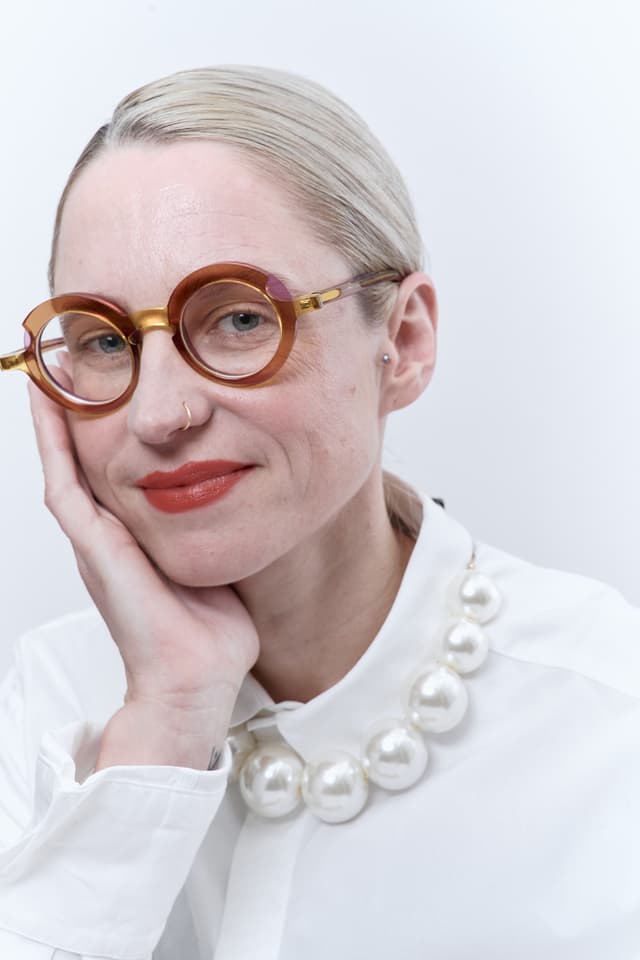
Fanny Fontaine
Art Curator
Fanny Fontaine is a Doctor in Comparative Literature and writer, translator. As a critic, she has been writing on contemporary artists in Tokyo.
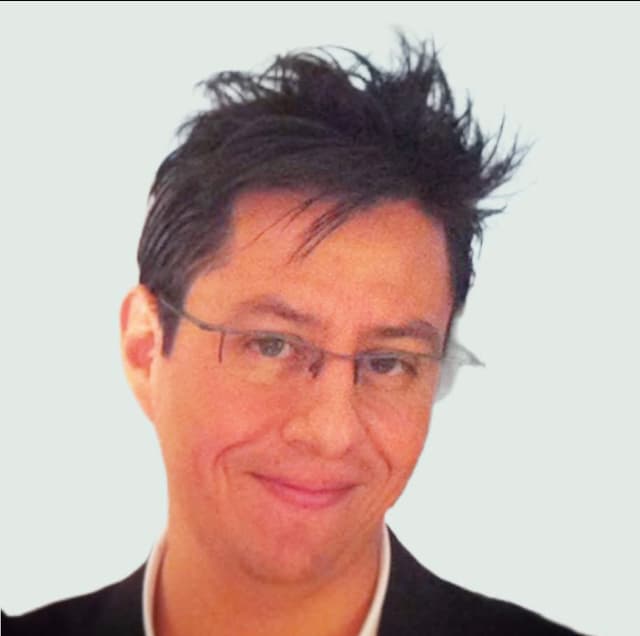
Rafael A. Balboa
Architect
Rafael A. Balboa is an architect (PhD) who works and resides in Kyojima, where he has been actively involved in the neighborhood over time.
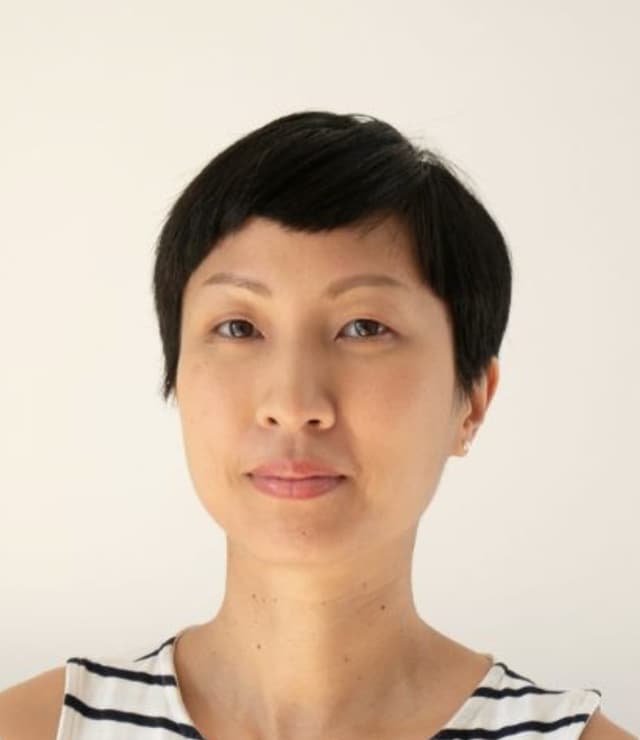
Ashley Lee Wong
Scholar and Co-Founder of MetaObjects
Ashley Lee Wong, PhD, is an Assistant Professor of Cultural Studies and Associate Director of the MA Cultural Management programme at The Chinese University of Hong Kong, and she is Co-Founder and Artistic Director of MetaObjects.

Tengyo Kura
Vagabond greeter and culture diver
Tengyo Kura is a social vagabond currently and temporarily based in Kyojima, Sumida, Tokyo. Through projects such as Sumida Mukojima EXPO and activities at the 100-year-old Barber Araki, he creates spaces for cultural exchange, using art, storytelling, and coffee to connect people and cultivate new forms of community with oshaberi (friendly conversations).

Tang Guanhua
Founder of the China Self-Sufficiency Lab, initiator of several consensus-community experiments
Co-founder of AnotherLand, Director of the China Self-Sufficiency Lab, initiator of the Chi’an Consensus Community Experiment and the Southern Life Consensus Community Experiment, and founder of the United Reborn Project.

Cléo Verstrepen
Art curator and researcher
Cléo Verstrepen is an independent curator and researcher, holding a PhD in art from Tokyo University of the Arts.

Jia Rujun
Researcher on Cooperative Housing and Urban Sustainability Strategies; Architect and Urban Designer; Principal Author of More Than Housing: A Century of Non-Profit Housing Development in Zurich.
Jia Rujun holds a Master’s degree in Architecture from ETH Zurich and is currently a PhD candidate at the Faculty of Architecture, The University of Hong Kong. Her long-term research focuses on the institutional frameworks and practices of cooperative housing in China and internationally.

New York City (USA)
Prime Produce Apprentice Cooperative
Prime Produce Apprentice Cooperative operates a grassroots, cooperatively-run member space in Hell's Kitchen, New York.

New York City (USA)
Wikimedia New York City
Wikimedia NYC is a 501(c)(3) non-profit organization and local Wikimedia chapter that brings New York together to share in a richer and more representative free knowledge ecosystem.
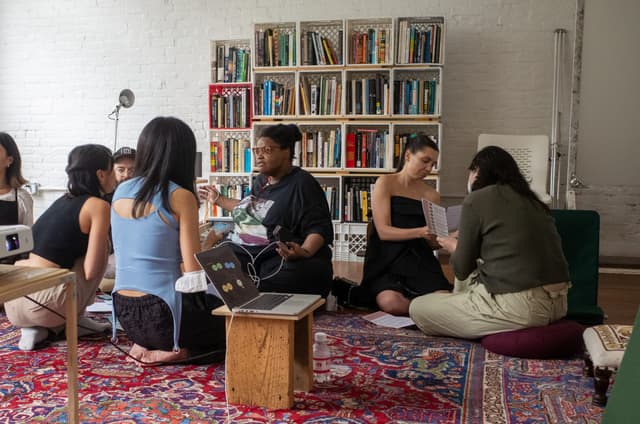
New York City (USA)
Cybernetics Library
The Cybernetics Library is an interdisciplinary browsing library that re-contextualizes the expansive history of cybernetic thought and practice.

Jakarta (Indonesia)
Gudskul
Gudskul Ekosistem consists of many elements: artists, curators, art writers, managers, researchers, musicians, directors, architects, cooks, artistic designers, designers, fashion designers, street artists and individuals with various other expertise.

Shenzhen (China)
Sea World Culture and Arts Center (SWCAC)
As China Merchants Shekou’s first innovative cultural complex, SWCAC brings together exhibitions, performances, placemaking, and art-related commercial activities, with the aim of continuously creating distinctive cultural and lifestyle experiences for the public.

Tokyo (Japan)
Untitled Space
Untitled Space is a space in Kyojima hosting transdisciplinary cultural events across literature, art and architecture.

Tanguiéta (Benin)
Écomusée Tata Somba
The Écomusée Tata Somba, opened in March 2021 in Tanguiéta (Atacora department, 25 km from Pendjari National Park), is West Africa's first ecological museum.

Santa Sofia (FC), Italy
Vero Stoppioni Gallery
The Vero Stoppioni Gallery of Contemporary Art in Santa Sofia was inaugurated in 1990, growing out of the long tradition of the Campigna Prize, an art event founded in 1955 by the Municipality of Santa Sofia thanks to the commitment of teacher Vero Stoppioni, to whom the gallery is dedicated.

LAM Foundation for Contemporary Arts
Partner

Comune di Santa Sofia
Promoting Committee

Parco Nazionale delle Foreste Casentinesi
Promoting Committee

Fondazione Cassa dei Risparmi di Forlì
Partner

San Marino University
Collaborator
.png&w=640&q=75)
Wikimedia NYC
Partner
.png&w=640&q=75)
Gestholding Srl
Partner

Conad City in Santa Sofia
Thanks

Sea World Culture and Arts Center (SWCAC)
Partner
See Also
2025 | International Forum on the Sustainability of Culture
The Forum is a global initiative dedicated to rethinking the role of cultural institutions in building sustainable futures.