Economy Ecosystems

Abstract
Cultural institutions are often caught in a paradox: expected to generate social value while depending on fragile, short-term economic resources. Rethinking their sustainability requires moving beyond linear funding models toward regenerative and symbiotic economies that benefit not only the institutions themselves but also workers, communities, and the environment. Ethical fundraising, mutualism, cooperative practices, and impact-driven investment all point toward new frameworks where cultural production and sustainability are inseparable.
This roundtable will explore how institutions can act as laboratories for alternative economies—spaces where redistribution, circular value chains, and long-term stewardship replace extractive logics. By reimagining resources not as finite assets but as flows that can be shared, regenerated, and multiplied, cultural institutions can become active players in shaping a fairer and more resilient future. The challenge is not just financial viability, but aligning economic practices with ecological and social responsibility, ensuring culture remains a catalyst for systemic change.
At stake is the very capacity of cultural institutions to embody the values they promote: inclusion, equity, and sustainability. Can they create new forms of solidarity economies that balance global pressures with local needs? Can they cultivate systems of accountability that value care, transparency, and reciprocity as much as growth? By drawing on diverse practices—from community-supported models to sustainability reporting—this conversation seeks to imagine economies not as constraints but as opportunities to build stronger ties between culture, society, and the planet.
Main questions for discussion
- How can cultural institutions build sustainable funding models that don't compromise their independence? What does sustainability mean in the context of the economy?
- What are some imaginary and existing economic models that cultural institutions are practicing now or working towards that reimagine current economic models? How can institutions contribute to collective, symbiotic economies that balance sustainability with fairness for workers and communities?
- Given the resources of most cultural institutions, how can they integrate practices—such as regenerative finance, or cooperative structures—that translate values into durable economic practices?
Date : Sep 27, 2025
Time : 15:00 - 17:00 PM
Moderators
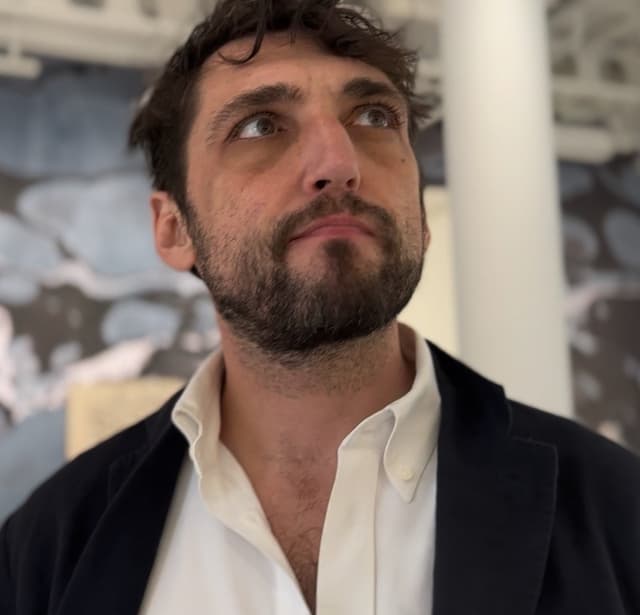
Cultural entrepreneur and strategist; Director of Initiatives at Institution.Art
Tom Cebic
Tomislav Cebic is a cultural entrepreneur and strategist currently serving as Director of Initiatives at Institution.Art. He studied at The New School’s Milano School in New York. Tom works at the intersection of art, technology, and community-building, focusing on projects that enable new models for creative practice and institutional innovation.

Economy Ecosystems
Julia Lammer
(A-I-R)

Pier Luigi Sacco
Economy Ecosystems
Università di Chieti-Pescara

Michał Pałasz
Economy Ecosystems
European Climate Pact Ambassador

Franco Broccardi
Economy Ecosystems
Studio Lombard DCA, Milano

Pascal Keiser
Economy Ecosystems
Bourges European Capital of Culture

Leigh Christie
Economy Ecosystems
Engineer and Entrepreneur

Yuheng Zhao
Economy Ecosystems
Impact Hub

Jota Castro
Economy Ecosystems
Artist

Johanna Hoffman
Economy Ecosystems
Design for Adaptation
See Also

2026 | Culture Commons: International Forum on the Sustainability of Culture
Culture Commons: global perspectives for building a more collaborative and sustainable culture.