History of Cinema in 12 online lessons
12 online lessons to understand the history of world cinema, from its origins to today's streaming platforms — passing through the industries, the divas, the movements that challenged everything, and the blockbusters that shaped contemporary mythologies. Accompanying this journey, the most authoritative voices on today's scene: university professors, film directors, critics, as well as curators and festival organizers — to (re)discover cinema together with those who truly live it. And a cineforum programme to learn to live it together.

12 online lessons to understand the history of world cinema, from its origins to today's streaming platforms, passing through the industries, the divas, the movements that challenged everything, and the blockbusters that shaped contemporary mythologies. Accompanying this journey, the most authoritative voices on today's scene: university professors, directors, critics, as well as curators and festival organizers, to (re)discover cinema together with those who truly live it. And a cineforum programme to learn to live it together.
DOWNLOAD THE COMPLETE PROGRAM
The course History of Cinema in 12 Lessons is a concrete opportunity to journey through a hundred and thirty years of moving images, for anyone who has never had the chance to study the history of cinema in full, despite having lived through it as a viewer their whole life. For anyone with only distant memories of a university exam, who wants to put them back in order with a more mature perspective. For anyone who is a longtime film lover but feels the need to piece things back together, or to discover angles and coordinates that rarely find space in the more familiar accounts. And for anyone already working in the field who wants to engage with those who study, narrate and produce cinema every day.
Guided by some of the most authoritative voices in Italian film criticism, research and filmmaking, the course traces the evolution of cinema from its origins, touches on its industries, the dialogues between distant geographies — how Western cinema engaged with Japanese, Chinese, Korean, Indian and Iranian cinema — and how the most politically engaged movements followed one another not only in Europe but also in Latin America. It explores how directorial authorship, stardom and the birth of the blockbuster reshaped our mythologies well beyond Hollywood's borders, and how new industries and algorithms are now shaping the way we watch and understand cinema today.
Among the instructors, voices who live cinema outside the classroom as well: Pedro Armocida, artistic director of the Pesaro International Film Festival; Paolo Bertolin, member of the selection committee of the Venice Film Festival and of the Directors' Fortnight in Cannes; Andrea Minuz, full professor at Sapienza University, member of the Ministry of Culture's expert committee on cinema and of the David di Donatello jury, who writes for Il Foglio and Il Sole 24 Ore; Roberto Chiesi, head of the Pier Paolo Pasolini Study Centre and Archive at the Cineteca di Bologna; Cristina Jandelli, full professor of Film History at the University of Florence and coordinator of the PhD programme in History of the Arts and Performance shared by Florence, Pisa and Siena; Marco Dalla Gassa, of Ca' Foscari University in Venice; Federica Villa, of the University of Pavia; Luca Malavasi, of the University of Genoa; Anna Bisogno, lecturer at Roma Tre and author of TV espansa. Piattaforme, social network, IA; Federico Striuli, co-curator of the Pordenone Silent Film Festival; and Tamara Shvediuk, film historian and restorer at Gosfilmofond, the Russian state film archive.
The lessons run from 28 October 2026 to 3 February 2027, every Wednesday, from 6 to 8 pm, in Italian, on the Zoom platform.
For the full calendar with dates, times and speakers, see the detailed programme.
Knowing cinema also means living it, discussing it, watching it together. For this reason, alongside the live lessons, recordings, and any materials shared by the speakers, the course includes a digital Cineforum, designed as a space for collective viewing and discussion alongside the programme.
English
Full course (12 lessons):
€100 until 16 October - BUY
( students under 26: €60)
€120 from 17 to 23 October
(students under 26: €70)
€140 from 24 October
(students under 26: €80)
Single lesson: €15 - CHECK SINGLE LESSON PAGE TO BUY
(students under 26: €10)
For information, write to us: institutionschool.subscription@gmail.com
If you are a student under 26, send us via email your ID and/or University info to get the discount code
Course Lessons
.avif&w=640&q=75)
Oct 28, 2026 at 5:00PM GMT+1
The Origins of Cinema: From the First Experiments to the Silent Era
How cinema was born, and how it became what we know today: from nineteenth-century experiments to the first public screenings, up to a language that within a few years would learn to tell stories, build worlds, and move emotions — still without a single word. A journey that also seeks out lesser-known films, to restore the richness of those first years.
%2520(1).jpg&w=640&q=75)
Nov 4, 2026 at 5:00PM GMT+1
The Birth of the Film Industries
How cinema, once a fairground curiosity, became a real business — in several places, almost at the same time: the divas who built, and sometimes carried with them, the fate of an entire industry. From Cinecittà in Italy to Hollywood, all the way to the Shanghai of Ruan Lingyu, the most important star of Chinese silent cinema. A lesson on who turned cinema into a business, starting from who turned it into spectacle.
%2520(1).jpg&w=640&q=75)
Nov 11, 2026 at 5:00PM GMT+1
Hollywood's Golden Age
A dream factory running at full capacity: a system in which every studio controlled production, distribution and exhibition, and every film was built on a tested formula — contracted stars, recognizable genres, a craft made of precision as much as vision. The myth of those years lives on through its protagonists, great masters like Ford, Hawks and Hitchcock.
.webp&w=640&q=75)
Nov 18, 2026 at 5:00AM GMT+1
Neorealism and Nouvelle Vague
A session dedicated to two movements that, fifteen years apart, break the same rule in two different ways: cinema built in the studio, with scripts written at a desk and professional actors. Italian Neorealism shoots its films in real streets, with ordinary people instead of actors, telling the everyday life of the postwar years. The French Nouvelle Vague, by contrast, emerges from a group of young critics, raised watching those very films, who decide to break the same rules — declaring it openly in their critical writings, even before making their own films.

Nov 25, 2026 at 5:00PM GMT+1
China, Japan, India and Iran: Eastern Cinema and Its Encounter with the West
A session dedicated to the international circulation of Asian cinema and to the ways in which Eastern and Western cinema observed, influenced and misread one another throughout the twentieth century. In 1951 Kurosawa's Rashomon won in Venice, and the West discovered a cinema that already had its own industries, languages and traditions — from Japan to China, by way of India and Iran.

Dec 2, 2026 at 5:00PM GMT+1
From Antonioni to Bertolucci, from Fellini to Bergman: the Masters of Modern Cinema
A lesson dedicated to the great masters who transformed cinema and the way we look at the world: from Visconti to Fellini, Antonioni, Pasolini and Bertolucci, all the way to Bergman. A journey through images, stories and languages that shaped the emergence of modern cinema.
%2520(1).jpg&w=640&q=75)
Dec 9, 2026 at 5:00AM GMT+1
Latin America on Screen: Industries, Filmmakers and Revolutions
A journey through Latin American cinema, from the major Mexican and Argentine film industries of the 1930s and 1940s to the political cinema of the 1960s and 1970s. An overview of the filmmakers and films that transformed cinema into a tool for storytelling, critique, and political imagination, from Buñuel to Glauber Rocha and Jodorowsky.

Dec 16, 2026 at 5:00PM GMT+1
From Fassbinder to Tarkovsky: Two Europes
Western and Soviet Europe, between the 1960s and 1970s: two systems, two ideas of cinema, two ways of telling the story of a continent divided by the Cold War. From the New German Cinema of Fassbinder, Herzog, and Wenders to Tarkovsky’s cinema, a lesson on the relationship between cinema, history, and politics.

Jan 13, 2027 at 5:00PM GMT+1
New Hollywood and the blockbuster
Between the 1960s and 1970s, Hollywood changes its face: the crisis of the studio system opens up space for a new generation of filmmakers, from Coppola to Scorsese, bringing auteur-driven approaches and ambitions to American cinema. Then Jaws and Star Wars usher in a new era—the blockbuster—destined to transform the relationship between cinema, industry, and audiences forever.

Jan 20, 2027 at 5:00PM GMT+1
Postmodern Cinema: From Lynch to Tarantino
A lesson dedicated to postmodern cinema and its rewriting of genres, images, and film history. From David Lynch to Quentin Tarantino, a journey through a new idea of authorship, shaped by quotation, fragmentation, and the blending of cinematic languages.

Jan 27, 2027 at 5:00PM GMT+1
China and South Korea: New Centers of Cinema
A lesson dedicated to the emergence of China and South Korea as new centers of international cinema from the late twentieth century into the new millennium. From the Chinese Fifth Generation to the cinema of Bong Joon-ho and Park Chan-wook, an overview of industries, filmmakers, and languages that have reshaped the geography of contemporary cinema.
.png&w=640&q=75)
Feb 3, 2027 at 5:00PM GMT+1
Streaming, Algorithms and Artificial Intelligence: Contemporary Cinema
A lesson dedicated to the transformations of contemporary cinema: from theaters to streaming platforms, from new models of distribution to the growing role of algorithms. Today, artificial intelligence opens a new chapter, challenging the relationship between authorship, machines, industry, and audiences.
Professors

Tamara Shvediuk
Tamara Shvediuk is a film historian, archivist and film restorer, curator, and specialist in film preservation and lost films.

Silent film historian, programme curator, restorer, and specialist in the preservation of film heritage
Federico Striuli
Federico Striuli is a silent film historian, programme curator, restorer, and specialist in the preservation of film heritage
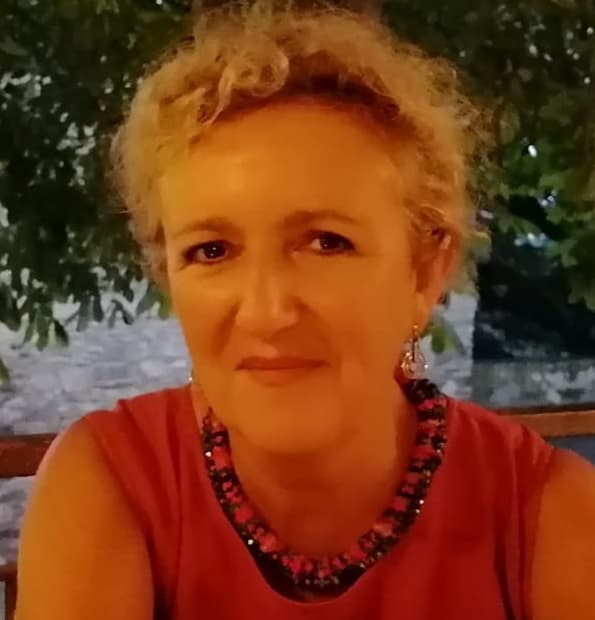
Cristina Jandelli is a full professor at the Department of Excellence SAGAS (History, Archaeology, Geography, Art, Performance) at the University of Florence
Cristina Jandelli
Cristina Jandelli is a full professor at the Department of Excellence SAGAS (History, Archaeology, Geography, Art, Performance) at the University of Florence, where she teaches Film History, History of Television Narrative Languages, Italian Cinema, and Theory and Analysis of Film and Television Language.
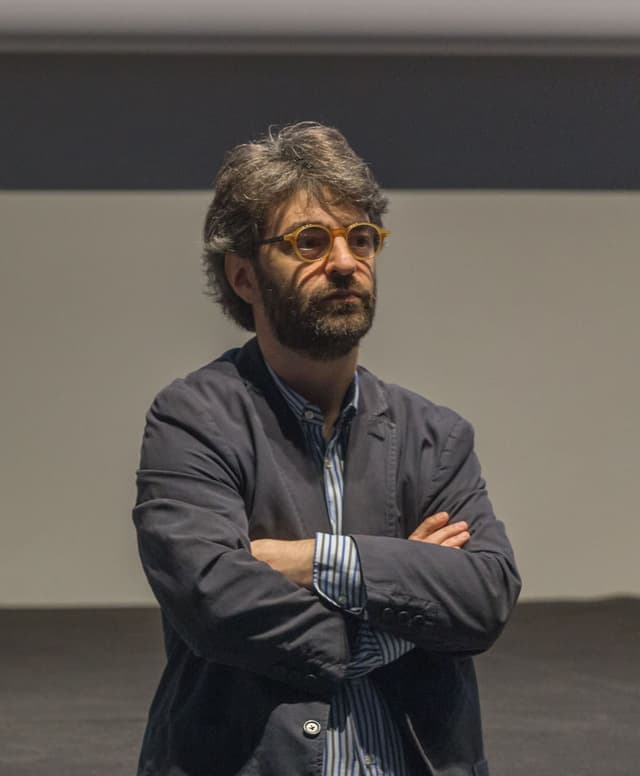
Associate professor at Ca' Foscari University of Venice, where he teaches Film Analysis, Film Theory, and Cinema and Visual Cultures.
Marco Dalla Gassa
Marco Dalla Gassa is an associate professor at Ca' Foscari University of Venice, where he teaches Film Analysis, Film Theory, and Cinema and Visual Cultures.

Director of the international journal Letteratura & Cinema and head of the Pasolini Study Centre and Archive at the Cineteca di Bologna
Roberto Chiesi
Roberto Chiesi is director of the international journal Letteratura & Cinema and head of the Pasolini Study Centre and Archive at the Cineteca di Bologna

Professor of film criticism at "La Sapienza" in Rome and director of the Pesaro Film Festival since 2015
Pedro Armocida
professor of film criticism at "La Sapienza" in Rome and director of the Pesaro Film Festival since 2015

Professor of Film History at Sapienza University of Rome and a contributor to the newspaper Il Foglio.
Andrea Minuz
Andrea Minuz is a professor of Film History at Sapienza University of Rome and a contributor to the newspaper Il Foglio.

Associate professor at the University of Genoa, where he teaches Film History and Analysis, Cinema and Visual Culture, and Contemporary Cinema and Television Seriality.
Luca Malavasi
Luca Malavasi is an associate professor at the University of Genoa, where he teaches Film History and Analysis, Cinema and Visual Culture, and Contemporary Cinema and Television Seriality.

Filmmaker and producer
Davide Ferrario
Filmmaker and producer

Actress and co-author of "il Morandini"
Luisa Morandini
Actress and co-author of "il Morandini"
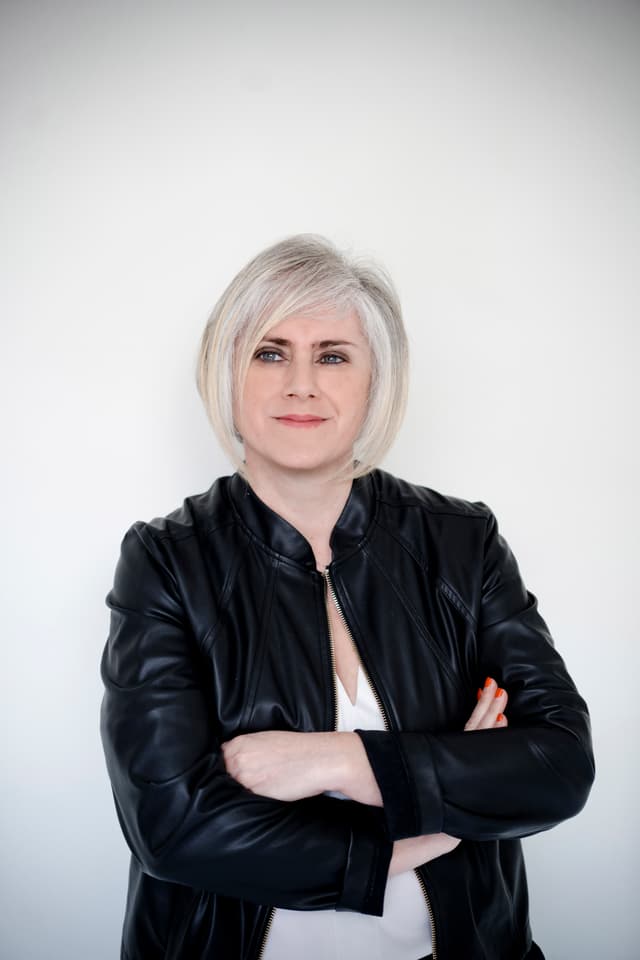
Associate professor of Cinema, Radio and Television at Universitas Mercatorum and television writer.
Anna Bisogno
Anna Bisogno is an associate professor of Cinema, Radio and Television at Universitas Mercatorum and television writer.
Subscribe to the newsletter