Course for Non-Curators: New Roles for a Changing Art Field
(Online)
Most curatorial programmes still prepare professionals for a model of exhibition-making developed decades ago. The Course for Non-Curators starts from a different assumption: the future of art will require entirely new formats, roles and institutions. What can emerge when art intersects with philosophy, technology, ecology, design, education, and social research?

The Course for Non-Curators: New Roles for a Changing Art Field is among the very first advanced graduate programmes of its kind, designed for practitioners who want to rethink how art is produced, experienced, circulated, and discussed in the twenty-first century.
The programme grows out of Institution, an experimental platform devoted to imagining new institutional models for art and society, to bring together artists, curators and thinkers from across and beyond the contemporary art field, creating an environment in which different forms of knowledge, practice and inquiry can meet. Its transdisciplinary structure turns these encounters into a space for experimentation, where artistic questions can be tested through unfamiliar insights and methods. Contributors include Hou Hanru, Charles Esche, Suzanne Lacy, Miwako Tezuka, Rirkrit Tiravanija, CLIMAVORE, Afrikaanderwijk Cooperative, Apichatpong Weerasethakul, Marcus Schmickler, gudskul, Fabio Beltram, Daniel Godínez-Nivón, Ute Meta Bauer, Colleen Macklin, Caroline Woolard, András Szántó, Federica Fragapane, and Joice Pereira, and many others. Furthermore, the programme counts among its contributors philosophers Christopher Fynsk and Sven-Olov Wallenstein, as well as curator and theoretician Vesna Madžoski, all members of the European Graduate School faculty. Read here the full programme.
Through lectures, talks, seminars, workshops, collective discussions and project development, the 27 selected participants will form a virtual cohort, critically engaging with the structures, assumptions and narratives that have shaped curatorial practice in direct dialogue with guest professors and the School team. Admission to the programme also means becoming part of a carefully selected international group whose members will be actively introduced to museums, biennials and cultural organisations looking for new profiles.
The course is organised around a set of interconnected thematic study trajectories – Time, Fieldwork, Language, Materiality & Embodiment, Speculative Platforms, Alt-Economy, and Instituting – which together provide its conceptual and methodological framework. Rather than functioning as separate thematic modules, they operate as interdependent lines of investigation through which participants can look into emerging and expanded modes of cultural practice across physical, digital, discursive, performative, and social contexts. Alongside the theoretical programme, students will develop their own projects through a series of mentored workshops and tutorials. Throughout the course, they will receive feedback from faculty members and invited practitioners while working individually and collaboratively on experimental propositions that challenge conventional exhibition models.
The programme culminates in the production of experimental "non-exhibitions". Three projects will be selected for realisation with partner institutions between the Fall of 2027 and Spring of 2028.
Upon successful completion of the programme, participants will receive a Certificate in Expanded Curatorial Practice, recognising their ability to design innovative formats beyond the traditional exhibition model, developing transdisciplinary projects across art, technology, philosophy, ecology and social research; to create participatory and community-based cultural initiatives; to build new institutional and organisational models for culture, producing and communicating complex ideas through public-facing projects.
Programme Details
- Duration: 27 October 2026 – 18 February 2027
- Format: Intensive online programme, Tuesday-Thursday, 2-6pm CET
- Language: English
- Who Should Apply: Artists, curators, researchers, educators, designers, cultural producers, and professionals from diverse disciplines seeking to engage with art’s expanded field in the 21st century.
- Tuition fee: €5,500 (payable in installments)
Available scholarships have now been fully awarded. Ten tuition awards of 500€ are available to candidates who wish to be considered for financial support towards the Course fee. To be considered, apply by September 24th and submit a short motivation statement through the form.
How to Apply
Applicants are required to submit:
- Completed application form
- Curriculum Vitae (max 3 pages)
- Statement of Interest (max 1000 words) outlining their motivations for joining the programme
- Portfolio or documentation of relevant projects (optional)
Applications should be submitted exclusively through the online form and will be reviewed in three rounds during the application period (1st: August 23rd / 2nd: September 13rd / 3rd: October 4th). A portion of the available places will be allocated at the end of each round. Applying earlier therefore does not guarantee admission, but it allows your application to be considered while a larger number of places is still available. Shortlisted candidates may be invited for an online conversation with members of the programme team. Selected participants will be notified shortly after each review process is complete.
For questions about the programme or the application process, write to
non-curators.subscriptions@institution.it
Institutional Partners:
Fundación Paiz and Bienal de Arte Paiz (BAP); more to be announced
Course Modules
TIME
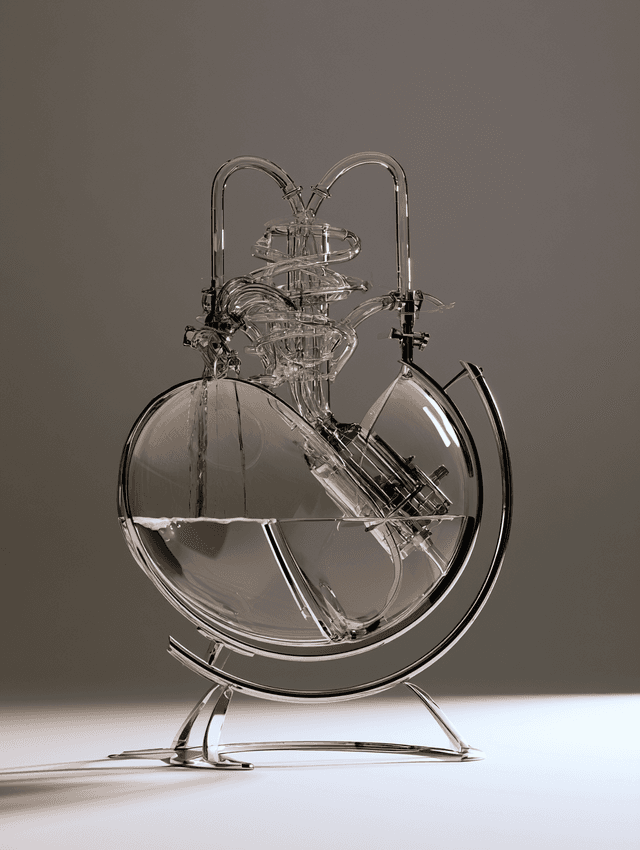
Time is not simply a sequence but a condition of relation: it can be experienced as rhythm, measured as system, composed as sound, extended as duration, or interpreted as a problem of perception and history...

INSTITUTING
Following a period of opposition in the late twentieth century marked by the rise of the independent curator challenging institutional authority, curatorial practice has more recently re-entered the institutional sphere, occupying complex roles that blur the boundaries between independence and affiliation...

FIELDWORK
The dematerialisation of the artwork, alongside the growing prominence of public and process-based and socially-driven artistic practices, has fundamentally challenged the traditional exhibition format as a site of artistic experience, creation, and reclamation...

MATERIALITY & EMBODIMENT
This line approaches materiality as an expanded field, encompassing substances and their physical properties, bodies and sensory perception, living organisms and ecological systems, as well as the technological and infrastructural processes through which matter is organised, transformed and circulated. Drawing on trans-feminist, posthumanist and ecological thought, it considers matter both as an active participant in the production of knowledge and as a medium through which relations, dependencies and different forms of agency become perceptible...

ALT-ECONOMY
Contemporary art workers are increasingly called upon to navigate the complex and often opaque networks of funding, sponsorship, and economic systems that underpin cultural production...
LANGUAGE
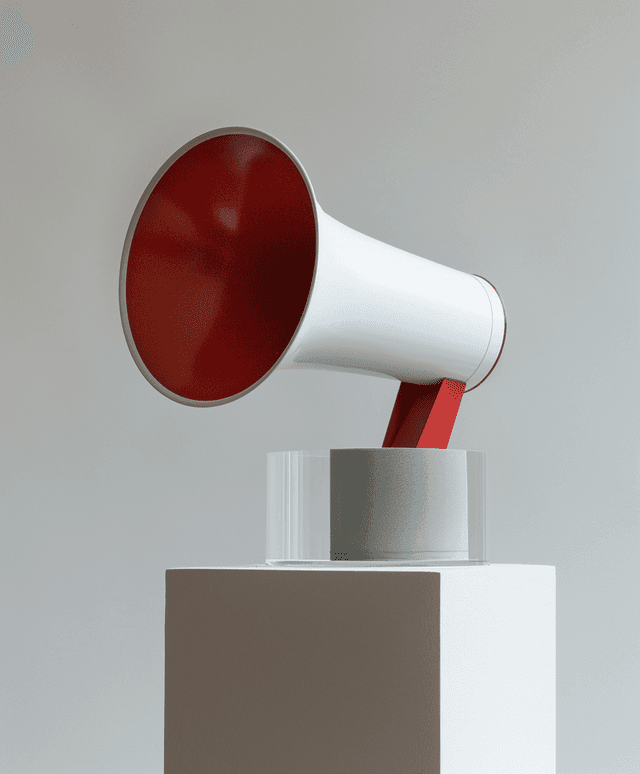
Bringing artistic practice into dialogue with philosophy, cognitive science and technological research, the line delves into language as an artistic medium, a cognitive process, a political instrument and a relational practice, opening new possibilities for translation, interpretation and collective imagination...

SPECULATIVE PLATFORMS
Platforms are understood here simultaneously as technical infrastructures, social environments, aesthetic interfaces, and political economies...
Professors

Curator, writer, and museum director
Charles Esche
Charles Esche is a curator, writer, museum director, and educator whose work has significantly shaped contemporary art discourse and institutional practice. Director of the Van Abbemuseum in Eindhoven from 2004 to 2024 and Professor of Contemporary Art and Curating at the University of the Arts London, he is known for experimental exhibition models and socially engaged approaches to collections, biennials, and public programs.
Hou Hanru
Hou Hanru is a prolific writer and curator based in Paris and Rome. He was Artistic Director of MAXXI (National Museum for 21st Century Arts, Rome, 2013-2022). He is an advisor for numerous cultural institutions including Power Station of Art, Shanghai, Times Museum, Guangzhou, Rockbund Art Museum, Shanghai, The Solomon Guggenheim Museum, New York, Westbund Art Museum, Shanghai. He frequently contributes to various journals on contemporary art and culture while serving at juries of major international awards. He also lectures in numerous international institutions and teaches at universities including Central Academy of Fine Arts, Beijing, School of Visual Art, New York. He has curated and co-curated around 150 exhibitions for last three decades across the world including: China/Avant-Garde, National Museum of Art of China, Beijing, 1989; Cities On The Move, 1997–2000; Shanghai Biennale, 2000; Gwangju Biennale, 2002; Venice Biennale -- French Pavilion, 1999, Zone of Urgency, 2003; Chinese Pavillion, 2007, The 2nd Guangzhou Triennial, 2005; The 10th Istanbul Biennial, 2007; The 10th Biennale de Lyon, 2009, The 5th Auckland Triennial, 2013,Growing in Difference, the 7th Shenzhen Hong Kong Bi-City Biennial of Urbanism and Architecture, UABB 2017-2018. His recent projects include: “On Kawara, Rules of Freedom, Freedom of Rules”, Taikwun, Hong Kong, 2025, “Home and Beyond – chapter 1, Hou Hanru’s curatorial journey”, Power Station of Art, Shanghai and Sea World Contemporary Art Center, Shenzhen, 2025-26.

Curator, editor, and theorist
Viktor Misiano
Viktor Misiano is a curator, editor and theorist. He has curated multiple artistic institutions and major artistic events, including the Pushkin National Museum of Fine Arts and the Central Asia Pavilion at the Venice Biennale. He is also the founder of the Manifesta Journal: Journal of Contemporary Curatorship (Amsterdam). His main research focuses on post-Soviet and East-European contemporary art, and the social and geopolitical role of curatorial practice.
.jpg&w=640&q=75)
Miwako Tezuka
Dr. Miwako Tezuka is the inaugural Director of Dib Bangkok, an international contemporary art museum opened in December 2025. Before this appointment, she held key leadership roles at several prominent institutions in New York, including Gallery Director of the Japan Society, Associate Curator of Contemporary Art at the Asia Society Museum, and Associate Director of Arakawa and Madeline Gins’s Reversible Destiny Foundation. Dr. Tezuka has curated numerous exhibitions, working with renowned artists such as Chen Chieh-jen, Robert Indiana, Kimsooja, Maya Lin, Mariko Mori, Yoshitomo Nara, Pinaree Sanpitak, and Yang Fudong, among others. She served as Associate Curator of the Hawaiʻi Triennial 2022, which featured works by 46 artists and collectives from across Asia and the Pacific region. Her scholarly writings have been published in exhibition catalogs and books by institutions such as the Museum of Modern Art (MoMA), New York; the Hirshhorn Museum and Sculpture Garden, Washington, DC; the Asian Art Museum, San Francisco; and the Setagaya Museum of Art, Tokyo, among others.

Curator and professor
Ute Meta Bauer
Ute Meta Bauer is a curator and professor whose work connects contemporary art, film, video, and sound through transdisciplinary formats. Founding Director of NTU CCA Singapore and full professor at Nanyang Technological University’s School of Art, Design and Media, she has held key curatorial roles at major international exhibitions, including Documenta11, the 3rd Berlin Biennale, the Nordic Pavilion at the 50th Venice Biennale, and the 17th Istanbul Biennial.

Rirkrit Tiravanija
Born in Buenos Aires, Argentina, Thai artist Rirkrit Tiravanija is known for a practice that overturns traditional exhibition formats in favor of social interactions through the sharing of everyday activities such as cooking, eating and reading. Creating environments that reject the primacy of the art object, and instead focus on use value and the bringing of people together through simple acts and environments of communal care, Tiravanija’s work challenges expectations around labour and virtuosity. Tiravanija is on the faculty of the School of the Arts at Columbia University, and is a founding member and curator of Utopia Station, a collective project of artists, art historians, and curators. He also helped establish an educational-ecological project known as The Land Foundation, located near Chiang Mai, Thailand. Tiravanija studied at the Ontario College of Art, Toronto, the Banff Center School of Fine Arts, Canada, the School of the Art Institute of Chicago, and the Whitney Independent Study Program, New York. He has exhibited at museums and galleries worldwide. Major solo shows include: Gropius Bau, Berlin (2024); Luma Arles, Arles (2024); MoMA PS1, New York (2023); Cultuurcentrum Strombeek, Grimbergen (2022); ICA, London (2019); Hirschhorn Smithsonian, Washington (2019); National Gallery Singapore (2018); Museumplein, Amsterdam (2016); YBCA, San Francisco (2015); Modern Art Museum of Fort Worth, Fort Worth, Texas (2014); Park Avenue Armory, New York (2013); Bonnierskonsthall, Stockholm (2011); Kunsthalle Bielefield (2010); Museé de la Ville de Paris (2005); Museum Bojmans Van Beuningen (2004); Chiang Mai University Art Museum (2004); Astrup Fearnley Museum of Modern Art in Oslo (2002); Los Angeles County Museum of Art (1999); and Museum of Modern Art, New York (1997). Tiravanija’s work has been recognised with numerous prestigious awards including the Benesse by the Naoshima Contemporary Art Museum in Japan and the Smithsonian American Art Museum’s Lucelia Artist Award, the Hugo Boss Prize from the Solomon R. Guggenheim Museum in New York (2004) and the 2010 Absolut Art Award. Tiravanija is on the faculty of the School of Visual Arts at Columbia University, and is a founding member and curator of Utopia Station, a collective project of artists, art historians, and curators. Tiravanija also co-founded an educational-ecological project known as The Land Foundation, located outside Chiang Mai, Thailand.
.JPEG&w=640&q=75)
Apichatpong Weerasethakul
Apichatpong Weerasethakul began making films and video shorts in 1994 and completed his first feature in 2000. Since 1998, he has also created installations and exhibitions across the world. Recognized as a singular voice in both cinema and contemporary art, his work weaves together memory, myth, desire, and landscape—often unfolding through non-linear, meditative structures. Apichatpong’s films include Memoria (2021) his first feature made outside Thailand, starring Tilda Swinton, which received the Cannes Jury Prize; Uncle Boonmee Who Can Recall His Past Lives, which won the Palme d’Or in 2010; Tropical Malady, winner of the Cannes Jury Prize in 2004; and Blissfully Yours, awarded Un Certain Regard in 2002. Syndromes and a Century (2006) has been widely celebrated as one of the defining films of the early 21st century. Beyond the cinema, Apichatpong’s installations explore themes of time, invisibility, and collective memory. Notable projects include Primitive (2009), Fireworks (Archives) (2014), and Invisibility (2016). More recent works such as Fic (2018), SleepCinemaHotel (2018), A Minor History (2021–2022), A Conversation with the Sun VR (2022), Solarium (2023), and Ring of Fire (2024, with Haegue Yang) continue to expand his interest in the unseen, the spiritual, and the ecological. Apichatpong’s work has been exhibited in museums, biennials, and festivals worldwide. A retrospective of his practice was presented at Centre Pompidou in Paris in 2024. He lives and works in Chiang Mai, Thailand.

Mieke Bal
Mieke Bal is author of 50 books and supervisor of 81 finished PhDs, the cultural theorist, critic, video artist and curator. She writes in an interdisciplinary perspective on cultural analysis, literature and art, focusing on gender, migratory culture, the critique of capitalism, and the political agency of art. She co-founded (1994) and directed ASCA, the Amsterdam School for Cultural Analysis, an interdisciplinary institute that is still thriving. From 2002 on, she also makes films, as a different, more in-depth, more contemporary and interactive mode of cultural analysis. Since then, writing, filmmaking and curating go together. She made the 16-channel video-installation Don Quijote: Sad Countenances (2019) with Mathieu Montanier, and a short essay film It’s About Time! Reflections on Urgency (2020). Her latest short film, made with Lena Verhoeff, Refugeedom: Lonely but not Alone, premiered in May 2023 in the SPEME program on traumatic memory. Her 50th book, Moments of Meaning-Making, was published by Valiz (Amsterdam) in 2025. Her next book on curating and semiotics is currently in production (London, Bloomsbury). www.miekebal.org

Formafantasma
Formafantasma is a research-based design studio investigating the ecological, historical, political and social forces shaping the discipline of design today. The studio was founded in 2009 by Andrea Trimarchi and Simone Farresin. The aim of the studio is to facilitate a deeper understanding of both our natural and built environments and to propose transformative interventions through design and its material, technical, social, and discursive possibilities. Working from their studio in Milan (Italy) and Rotterdam (The Netherlands), the practice embraces a broad spectrum of typologies and methods, from product design through spatial design, strategic planning and design consultancy.

Suzanne Lacy
Suzanne Lacy is renowned as a pioneer in socially engaged and public performance art. Her installations, videos, and performances deal with sexual violence, rural and urban poverty, incarceration, labor and aging. Lacy’s large-scale projects span the globe, including England, Colombia, Ecuador, Spain, Ireland and the U.S. Her work has been reviewed in major periodicals and books and she exhibits in museums across the world. Also known for her writing, Lacy edited Mapping the Terrain: New Genre Public Art and authored Leaving Art: Writings on Performance, Politics, and Publics, 1974-2007. She is a resident artist at 18th Street Arts Center.

Daniel Godínez Nivón
Daniel Godínez Nivón is a visual artist, educator and independent researcher based between Amsterdam and Mexico City. His practice is grounded in tequio—a form of collective work rooted in Indigenous communities, especially in Oaxaca, Mexico—shaping a practice that merges social participation, pedagogy, and collective knowledge-making. Godínez Nivón investigates the ties between dreaming and the living world, asking how the dreams of humans and other beings can illuminate environmental crises and spark collective imagination. He studied at the UNAM Faculty of Arts and Design in Mexico City and later completed a residency at the Jan van Eyck Academie in Maastricht (2021–2022). His work has been exhibited, screened, and performed internationally, including at the Kochi-Muziris Biennale, Museo Tamayo, MUAC, Van Abbemuseum, Kunsthalle Bern, macLYON, ATLAS Arts and Amant. In 2022, he received the Prince Claus Fellowship Award and represented Mexico at the 23rd Milano Triennale, where the Mexican Pavilion received the Silver Bee Award. He currently holds the Mondriaan Fonds Artist Basis Grant (2025–2029).
.png&w=640&q=75)
Colleen Macklin
Colleen Macklin is a game designer and a Professor in the school of Art, Media and Technology at Parsons School of Design. She’s interested in how games model and reveal ideologies through systems. At Parsons, she is the founder and co-director of PETLab, a design research lab that develops games for experimental learning and social engagement. PETLab projects include disaster preparedness games and sports with the Red Cross, the urban activist game Re:Activism and the physical/fiscal sport Budgetball. She is a member of the game design collective Local No. 12, known for the videogame Dear Reader and the social card game, The Metagame. She has co-authored (with John Sharp), Games, Design and Play: A detailed look at iterative game design (Addison Wesley Professional, 2016) and Iterate: Ten Lessons in Design and Failure (MIT Press, 2019). Colleen has a BFA in Media Arts from Pratt Institute, and an MA in International Affairs from The New School.

Marialaura Ghidini
Marialaura Ghidini è una curatrice e ricercatrice il cui lavoro esplora le intersezioni tra arte e tecnologie digitali. Il suo interesse si rivolge a ciò che spesso rimane invisibile—dalle infrastrutture delle piattaforme alla retorica aziendale—e a come queste plasmino la produzione della conoscenza e il rapporto tra le persone e i loro ambienti. A seguito del suo dottorato di ricerca practice-based presso CRUMB, University of Sunderland (2015), ha approfondito la curatela sul web e la curatela digitale, concentrandosi sul loro impatto sulla produzione culturale, sull'accesso alla cultura e sul coinvolgimento del pubblico, e indagando i processi di traduzione tra contesti online e offline. Tra i suoi progetti figurano or-bits.com (2009–2015), #exstrange (2017), curating.online (Italian Council 9, 2021), Codici Magici (2023) e We Are All Users, Till We Are Not (MACTE Digital, 2025). Ha inoltre tenuto seminari e conferenze presso università internazionali ed è stata docente e course leader presso lo Srishti Manipal Institute of Art, Design & Technology di Bangalore (2015–2021). È coautrice di La Natura Ibrida della Curatela Digitale. Dal Web all’IA (Mimesis, 2026) e co-curatrice del progetto editoriale Silicon Plateau. https://marialaura-ghidini.hotglue.me/

farid rakun
farid rakun, trained as an architect (B.Arch from Universitas Indonesia and M.Arch from Cranbrook Academy of Art), wears different hats dependent on who is asking. He is a part of the artists’ collective ruangrupa with whom he co-curated TRANSaction: Sonsbeek 2016 in Arnhem NL and provided a collective Artistic Direction for documenta fifteen (Kassel, 2022). ruangrupa is a Jakarta-based collective established in 2000. It is a non-profit organization that strives to support the idea of art within urban and cultural context by involving artists and other disciplines such as social sciences, politics, technology, media, etc, to give critical observation and views towards Indonesian urban contemporary issues. ruangrupa also produce collaborative works in the form of art projects such as exhibition, festival, art lab, workshop, research, as well as book, magazine and online-journal publication. In 2018, learning from their experience establishing Gudang Sarinah Ekosistem and together with Serrum and Grafis Huru Hara, ruangrupa co-initiated GUDSKUL: contemporary art collective and ecosystem studies (or Gudskul, in short, pronounced similarly like “good school” in English). It is a public learning space established to practice an expanded understanding of collective values, such as equality, sharing, solidarity, friendship and togetherness.
Curator, art critic, lecturer
Fabio Cavallucci
Fabio Cavallucci is the founder of Institution and a curator. He has directed several cultural institutions in Italy and abroad. He teaches Contemporary Art History at the Academy of Fine Arts in Carrara.

Vesna Madžoski
Vesna Madžoski (PhD) is a fellow at the European Graduate School in Switzerland. She taught critical theory in the MA Artistic Research Program at the Royal Academy of Arts in The Hague and has initiated multiple international art projects. Since 2006, she has been a member of the Amsterdam-based art collective Public Space With A Roof. As a lecturer, she has delivered numerous talks and lectures on contemporary art at leading art and theory institutes in Europe and the USA. She was one of the editors of the Belgrade-based magazine Prelom. Over the past decade, her research has focused on analyzing the global art system, with a particular interest in identifying forms of control and censorship within this domain. Her PhD dissertation, titled DE CVRATORIBVS. The Dialectics of Care and Confinement (Atropos Press, 2013), examines curatorship in post-World War II Europe and the consequences of transformations in this field at both aesthetic and political levels. With a group of enthusiasts, she initiated SKVER in 2018 with the aim of preserving the recent history of Timok Region Valley in Serbia. More info: https://madzoski.synthasite.com/

Elena Sorokina
Elena Sorokina has held key positions within major art events, notably as Associate Curator of documenta 14 (Athens/Kassel) and as Director of HISK (Higher Institute for Fine Arts) in Belgium in 2017. In 2020, she co-founded the Initiative for Practices and Visions of Radical Care. In 2022, she co-curated the Armenian Pavilion at the 59th Venice Biennale. Her curatorial practice unfolds on an international scale, within museums and art platforms such as BOZAR (Brussels), the Musée d’Art Moderne de la Ville de Paris, the Pera Museum (Istanbul), the Rudolfinum (Prague), and the Centre Pompidou (Paris). She is currently co-curating Survival Kit Festival in Riga, Latvia, entitled Arrow of the Wind: On Artists and Healers.
András Szántó
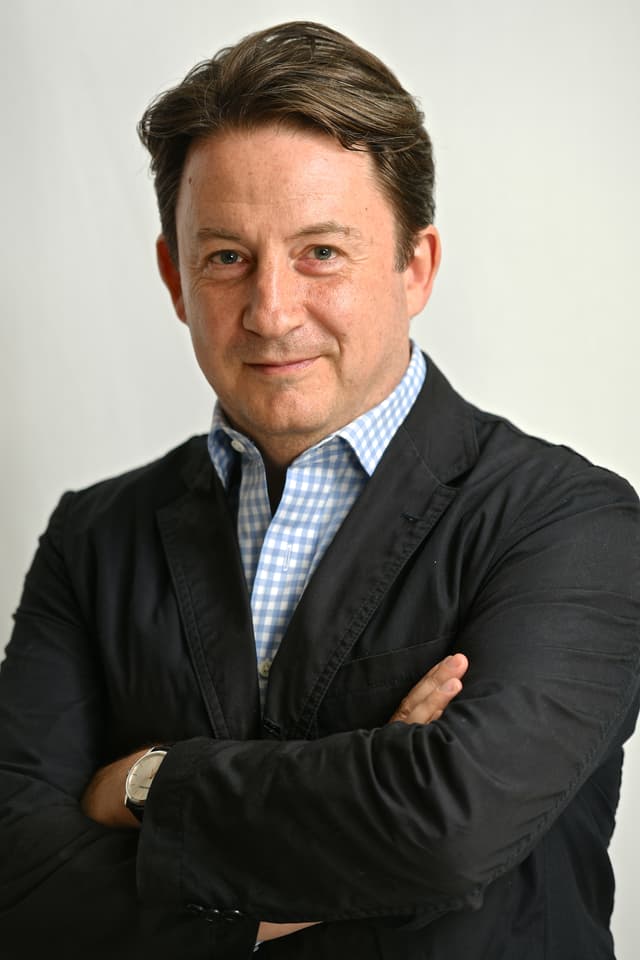
András Szántó, PhD, advises museums, cultural institutions, and leading brands on cultural strategy. An author and editor, his writings have appeared in The New York Times, Artforum, The Art Newspaper, and many other publications. As a cultural strategy advisor, he consults museums, foundations, cultural and educational institutions on strategic planning and new project development worldwide. He has overseen the National Arts Journalism Program at Columbia University, the Global Museum Leaders Colloquium at the Metropolitan Museum of Art, and the Museums of Tomorrow Roundtable at the Fine Arts Museums of San Francisco. Szántó, who lives in Brooklyn, has been conducting conversations with art-world leaders since the early 1990s, including as a frequent moderator of the Art Basel Conversations series. His recent books include The Future of the Museum: 28 Dialogues (2020), Imagining the Future Museum: 21 Dialogues with Architects (2022), and The Future of the Art World: 38 Dialogues (2025).

Art historian, publisher and curator
Morad Montazami
Morad Montazami is an art historian, a publisher and a curator. After serving at Tate Modern, she is now the founder of the platform Zamân Books & Curating, committing her studies to transnational studies of Arab, Asian and African modern and contemporary art.

Molemo Moiloa
Molemo Moiloa lives and works in Johannesburg, and has worked in various capacities at the intersection of creative practice and community organizing. She currently works on notions of ungovernability, social infrastructures of cultural organizing, and relationships to nature. Molemo is co-director of creative sector insights and data analytics company, Andani.Africa. She is one half of the artist collaborative MADEYOULOOK, who explore everyday popular imaginaries and their modalities for knowledge production. She also co-leads the Open Restitution Africa project, an Africa-focused research platform for restitution of African heritage and co-leads the ungovernable, an experiment in communitary practice and ungovernability. Molemo was a Soros Arts Fellow 2023/24, was a Chevening Clore Fellow 2016/17, and winner of a Vita Basadi Award for 2017. MADEYOULOOK were selected artists of the South African Pavilion for the Venice Biennale 2024, were DAAD Artists-in-Berlin fellows for visual arts 2022 and Lumbung artists at documenta fifteen, 2022. They were nominees for the VLC Prize for Art and Politics 2016/17 at the New School, New York and the MTN Young Contemporaries 2012.

Bogna Burska
Bogna Burska, a visual artist using many forms of expression and playwrite, currently a professor at the Faculty of Artistic Research and Curatorial Studies at the Academy of Fine Arts in Warsaw. From 2006 to 2024, she worked in the Intermedia Department at the Academy of Fine Arts in Gdańsk. Her works address themes of physicality, memory and emotion, often drawing from social narratives and visual pop-culture clichés. She juxtaposes what is beautiful with what is widely considered ugly, revolting or rejected. Blood-red colour is a recurring motif in her work: installations immersed in blood-red paint and red paintings. Her practice is often described as a meeting point between critical art and aesthetic inquiry. For many years, she also worked with found footage, examining the mechanisms through which contemporary narratives are produced and represented. She later returned to painting, which took on a new, organic and delicate form. She is the author of Nest, The End of Violence (with Magda Mosiewicz), Revolt of the Deaf. Renewal, and other texts presented in art galleries and theatre spaces. As of late, she has mainly been working with themes of communication and structures of mutual understanding in changing ecosystems. She exhibits in Poland and abroad; her work combines an artistic perspective with research and teaching. In 2006 together with Daniel Kotowski, she represents Poland at the Polish Pavilion at the 61st International Art Exhibition – La Biennale di Venezia.
Daniel Kotowski
Daniel Kotowski, artist and performer. He works with video, installation, photography, and objects, directs performances, and initiates social processes. He graduated from the Academy of Fine Arts in Warsaw (2018) and the Polish-Japanese Academy of Information Technology in Warsaw (2016). He is currently completing his PhD at the Academy of Fine Arts in Gdańsk. He was nominated for the Paszport Polityki Award (2024) and received artistic scholarships from the City of Warsaw (2025) and the Polish Ministry of Culture and National Heritage (2026). In the same year, together with Bogna Burska, he represents Poland at the Polish Pavilion at the 61st International Art Exhibition – La Biennale di Venezia. His works have been presented, among others, at the Museum of Modern Art in Warsaw, Zachęta – National Gallery of Art, the Muzeum Sztuki in Łódź, Studio Theatre in Warsaw, Pickle Bar in Berlin, and the Staatliche Kunstsammlungen Dresden.

Paula Nerlich
Dr Paula Nerlich is an experimental designer, researcher, educator, and facilitator whose practice explores how we can work with living systems as collaborators rather than simply as materials. As a biodesigner, she engages with sensory materials and living systems to investigate how biological processes can shape the ways we design, make, and experience the world. Working across biomaterials, sensory experience, and more-than-human design, she brings together creative practice, scientific research, and hands-on experimentation. Originally trained in textile design, Paula's practice has evolved to focus on living, responsive, and time-based materials, including bacterial cellulose, mycelium, and food-surplus biomaterials. She is interested in biological processes as dynamic systems that shape materials and artefacts over time, inviting new ways of thinking about care, ecology, and our relationships with the living world. Paula completed her PhD at the Hub for Biotechnology in the Built Environment, where she explored living textiles and human–microbial relationships. She is an Academic and Artistic Associate at the Circular School, HfG Karlsruhe, and an Associate Lecturer at the MA Biodesign, Central Saint Martins. Across her teaching and facilitation, she creates environments where making, experimentation, observation, and critical reflection become methods for exploring materials, processes, and emerging ideas. Her practice spans research, exhibitions, public engagement, and collaborations with scientists, designers, artists, and cultural organisations. Whether working in the studio, laboratory, or exhibition context, Paula develops participatory experiences that encourage close engagement with sensory, living, and responsive materials, fostering curiosity, material inquiry, and new perspectives on designing with living systems. https://www.paulanerlich.com/
.png&w=640&q=75)
Federica Fragapane
Federica Fragapane is an independent information designer. Over the years, she has created data visualization projects for the United Nations, the World Health Organization, the Publications Office of the European Union, the BBC, Scientific American, Google, Triennale Milano, and La Lettura of Corriere della Sera. In 2023, three of her data visualizations became part of the permanent collection of the Museum of Modern Art in New York. Across many of her projects, she adopts an experimental approach, carefully selecting visual languages to invite readers to explore the stories told by the data.

Keir Milburn
Dr. Keir Milburn is a writer, researcher, and consultant. He has a background as an academic in political economy and organisation theory and is currently co-director of the action-research think tank Abundance. He is the author of Generation Left (2019 Polity) and co-author, along with Bertie Russell and Kai Heron, of Radical Abundance: How to Win a Green Democratic Future (2025). As a member of the Red Plenty Games Collective he also designs and runs political strategy games and uses game play to research common political imaginaries. He also co-hosts the popular #ACFM podcast on Novara Media.
Caroline Woolard
Caroline Woolard is a founding co-organizer of Art.coop and Head of Strategy at Pollinator.coop. She is the Area Head of Foundations in the Department of Art and Design at Montclair State University and the co-author of two major reports: Solidarity Not Charity (Grantmakers in the Arts, 2021) and Spirits and Logistics (Center for Cultural Innovation, 2022) and three books: Making and Being (Pioneer Works, 2019), a book for educators about interdisciplinary collaboration, co-authored with Susan Jahoda; Art, Engagement, Economy (onomatopee, 2020) a book about managing socially-engaged and public art projects; and TRADE SCHOOL: 2009-2019, a book about peer learning that Woolard catalyzed in thirty cities internationally over a decade. Woolard’s artwork has been featured twice on New York Close Up (2014, 2016), a digital film series produced by Art21 and broadcast on PBS. https://carolinewoolard.com/

Fabio Beltram
Fabio Beltram is an Italian physicist, known for his work in condensed matter physics and nanoscience. He earned a degree in electronic engineering from the University of Trieste in 1985 and a degree in physics from the University of Bologna in 1988. Between 1986 and 1991 he worked as a researcher in the United States at AT&T Bell Laboratories, before joining the Scuola Normale Superiore in Pisa in 1992, where he became full professor of condensed matter physics in 2000. In 2001 he founded the NEST Laboratory, an interdisciplinary research and training centre on nanoscience that today involves the Scuola Normale Superiore, the Italian National Research Council, the Istituto Italiano di Tecnologia and the Scuola Superiore Sant'Anna. He served as deputy director of the Scuola Normale Superiore from 2005 to 2010 and as its director from 2010 to 2016, a period during which the institution absorbed the Istituto Italiano di Scienze Umane and expanded its doctoral offerings to include social and political sciences. Beltram is a fellow of the American Physical Society and has been decorated as Grande Ufficiale dell'Ordine al merito della Repubblica Italiana. His research spans nanoscience and nanotechnology, and he has authored around three hundred publications in international journals and patents. He currently serves as president of the Fondazione Pisana per la Scienza.

Bart De Baere
From 1986 until 2001 he was second in command at the Museum of Contemporary Art in Ghent, directed by Jan Hoet, curating numerous exhibitions there, notably This is the show and the show is many things in 1994, now considered to be the first of a lineage of process driven exhibitions. He was a curator of Documenta IX in Kassel in 1992 (with Pier Luigi Tazzi, Denys Zacharopouloq and Jan Hoet as artistic director), and of projects such as Jimmie Durham - David Hammons - Pedro Cabrita Reis, in 1993, Kunsthalle Fribourg, Switzerland (with Cis Bierinckx) 'Europe', a project for 'Universalis', in 1998, Bienal de Sao Paulo, (with Maaretta Jaukkuri), A Story of the Image, in 2009, Shanghai Art Museum, National Museum of Singapore (with Paul Huvenne), 6th Moscow Biennial, in 2015, VDNH (inviting Defne Ayas and Nicolaus Schafhausen as co-curators), When Faith Moves Mountains, in 2022, Pinchuk Art Centre, Kyiv, (with Bjorn Geldhof). He was amongst the first to propose an integrated mode of presenting art, encompassing different presentation formats (cfr. 1998 “The integrated Museum”, in Stopping the Process?, NIFKA, Helsinki and 2002 “Potentiality and public space, archives as a metaphor and example for a political culture”, in Interarchive, Köln, Verlag der Buchhandlung Walther König. He has always supported the self-empowerment of diverse situations worldwide, from advising the city of Johannesburg in founding an international art biennial during the transition away from Apartheid, over having been a member of the International Advisory Board of the Soros Centers for Contemporary Art, up to chairing the advisory board of Tselinny Center of Contemporary Culture in Almaty, Kazakhstan now. From 2002 until 2025 Bart De Baere was director of M HKA in Antwerp, Belgium, an international contemporary art and visual culture museum that incorporates a film museum and the where he founded the Flemish Centre for Visual Art Archives. In 2002 he co-founded as Vice-President the association ‘Centrum voor Hedendaagse Kunst’, Brussels, which renovated the former Brewery ‘Wielemans-Ceuppens’ and turned it into the international Kunsthal Wiels. In 2012 he co-founded the European museum confederation L’Internationale. In 2021 he co-founded as vice-president the international non for profit organisation ‘L’Internationale Association’. From 2017 until 2025 he committed to CIMAM, most recently as its secretary-general, before that as the chair of CIMAM’s Museum Watch Committee, looking at situations of crisis in museums worldwide.
Joice Preira
Joice Preira is an expert in Strategic Foresight and Futures Studies, a consumer insights analyst specializing in Social Foresight. Until 2026, she served as President of ALAF – Associação Latina de Futuros, an international organization dedicated to promoting anticipatory thinking in Latin America, and is co-founder of ABF Pro – Brazilian Association of Professional Futurists. She teaches Futures Design and Strategic Foresight in Brazil's leading Master's program in Futures & Strategic Foresight. She was a speaker at TEDx Barletta (2020) with the talk "Futures Studies Explained to My Daughter" and at TEDx Verona (2023) with the workshop "Verona in 2050: What Will Its Natural Capital Be Like?" She currently coordinates the Advisory Board of the IFF Italian Institute for the Future Foundation.

Marcus Schmickler
Marcus Schmickler works in contemporary and electronic composition, combining computer-based and instrumental music with a research-oriented approach. His multichannel works have been performed on international stages and explore the formalization of psychoacoustic and perceptual phenomena such as Shepard tones and data sonification. Schmickler writes on topics related to computer music and has received several awards, including the Rome Prize of the German Academy. He has taught at Bard College, CalArts, the Robert Schumann Hochschule, and the IEM in Graz. His compositions have been performed internationally by renowned ensembles. He lives in Cologne and Vienna. piethopraxis.org

Onome Ekeh
Onome Ekeh, born and raised on both sides of the Atlantic, OE started out as a painter, transitioned to design, fell in love with cinema, and somewhere in the collusion, went digital. Along the way she picked up an AI habit. She presides over a diverse body of work that encompasses film, video, theater, literature, and radio. She is the recipient of numerous awards and fellowships including the Jerome Foundation, the Greenwall Foundation Fellowship, a Turbulence Media Award, and the Künstlerhaus Büchsenhausen Fellowship.Exhibitions include shows at Museo Moderno, Buenos Aires ( Especulaciones ); the House of Electronic Arts Basel (HEK); Basel Social Club (Art Basel), Kunsthaus Baselland; Kunsthaus Aarau (upcoming). She is featured in the Serpentine Gallery publication, The Shape of the Circle in the Mind of a Fish. During Berlin Art Week 2024, she curated The Glittering Field, a showcase featuring 16 international artists for AOA;87 Contemporary. OE is a frequent speaker and panelist on the cultural dynamics of technology and nature and currently lectures on Speculative Culture in the Masters and Bachelors program of the Basel Academy of Art & Design in Switzerland.
.jpg&w=640&q=75)
Sven-Olov Wallenstein
Sven-Olov Wallenstein is Professor of Philosophy at Södertörn University, Stockholm, and the editor of the online journal Site Zones (https://www.sitezones.net/). He is the translator of works by Winckelmann, Lessing, Kant, Hegel, Frege, Husserl, Heidegger, Levinas, Derrida, Deleuze, Foucault, Rancière, Agamben, and Adorno, as well as the author of numerous books on philosophy, contemporary art, and architecture. Recent publications include: Robert Smithson (2025), Adornos musik (2024), Aisthesis: Estetikens historia (2 vol., ed. with Cecilia Sjöholm, 2023), Den sista bilden: Det moderna måleriets kriser och förvandlingar (2022), Critical Theory: Past, Present Future (ed. with Anders Bartonek, 2021), Spacing Philosophy: Lyotard and the Idea of the Exhibition (2019, with Daniel Birnbaum), Upplysningens estetik: Nedslag i 1700-talet (2019), and Adorno: Negativ dialektik och estetisk teori (2019).

Chus Martínez
Chus Martínez has a background in philosophy and art history. She is currently the Head of the Institute of Art Gender Nature of the FHNW Academy of Arts and Design in Basel, Switzerland, and associate curator of TBA21 | Thyssen-Bornemisza Art Contemporary. She is board member of CIMAM (International Committee for Museums) and also serves on the advisory boards of numerous international art institutions, including SAHA Association in Istanbul; De Appel, Amsterdam and the Deutsches Historisches Museum, Berlin. She has been the Chief Curator at El Museo Del Barrio, New York and dOCUMENTA (13) Head of Department. Previously she was Chief Curator at MACBA, Barcelona, Director of the Frankfurter Kunstverein. Martínez has organized numerous exhibitions and publications with contemporary artists. She lectures and writes regularly including numerous catalogue texts and critical essays and is a regular contributor to international journals. Recent exhibitions: Danish Pavilion at the 61st Venice Biennale (2026) with artist Maja Malou Lyse; A Velvet Ant, a Flower and a Bird at the Potter Museum of Art, Melbourne (2026); Pedagogies of War, featuring artists Roman Khimei and Yarema Malashchuk, at the Museo Nacional Thyssen-Bornemisza and TBA21; The Oracle, the 36th Ljubljana Biennale of Graphic Arts (2025); Clear, Lucid, and Awake at the Art Sonje Center, Seoul (2025); Stephanie Comilang: Search for Life at the Museo Nacional Thyssen-Bornemisza (2024); Doblad mis Amores, Collegium February 2023; Living in Joy, Art Sonje March 2023; Mathilde Rossier, Fondation Pernod Ricard, May 2023. Recent publications are The Complex Answer: On Art as a Nonbinary Intelligence, Sternberg Press (2023); Like This. Natural Intelligence As Seen by Art. Hatje Cantz Verlag (2022); Coding Care (edited together with Sabine Himmelsbach), Hatje Cantz Verlag, 2022; Corona Tales. Let Life Happen to You, Lenz, (2021) and The Wild Book of Inventions, Sternberg Press (2020).
Kulagu Tu Buvongan
Kulagu Tu Buvongan is a collective of majority Manobo and Tinananun lumad people from the Central Cordillera region of Mindanao. Their projects focus on environmental justice and the indigenous struggles in the Pantaron Mountain Range. Their projects have been exhibited at SAVVY Contemporary (Berlin), Estación Terrena (Bogota), Para Site (Hong Kong), FONTE (São Paulo), 421 (Abu Dhabi), and Colomboscope 2024.

Eva Fotiadi
Eva Fotiadi (PhD) is a historian of contemporary art based in the Netherlands. She is a researcher at the Avans Centre for Applied Research in Art, Design and Technology and a lecturer at St. Joost School of Art & Design. Her current research focuses on multisensory experiences in art exhibitions, with an emphasis on disability art and activism. This work builds on her previous research into interdisciplinary, participatory, and public art, as well as exhibition histories.

Kate Rich
Kate Rich is a trade artist and feral economist, trading in and outside formal institutions for over 30 years.She is co-founder of the Bureau of Inverse Technology (BIT), an international agency producing an array of critical information products including economic and ecologic indices, event-triggered webcam networks and animal operated emergency broadcast devices. From 2003-2023 she ran Feral Trade, a long-range economic experiment and underground freight network, utilising the spare carrying capacity of the art world for the transportation of groceries. Kate has worked as bar manager, usher, director and finance team member at Bristol's all-volunteer run Cube Microplex. She is system administrator with the Irational.org linux server collective, a satellite agent of the FoAM network of transdisciplinary labs and a member of the Community Economies Institute. In 2019 she co-organised RADMIN, Britain's first festival of Administration. And in 2020 Kate established the Feral MBA, a radically reimagined training course in business for artists and others. Alongside colleagues from FoAM she is currently setting up the Institute for Experiments with Business a lab for investigating new and wild shapes for business and enterprise in Europe. This work forms part of Kate's Marie Sklodowska-Curie Postdoctoral Fellowship, hosted at the Alpine Community Economies Lab (ACELab), research arm of Brave New Alps (Italy).

Bianca Elzenbaumer
Dr Bianca Elzenbaumer is a feminist design researcher based in the Italian Alps. Elzenbaumer is a founding member of the design practice Brave New Alps and of the community academy La Foresta. Her 40-year research plan focuses on supporting and creating community economies and commons starting from the rural places she lives in. She holds a PhD from Goldsmiths, University of London, an MA from the Royal College of Art in London and an MA in Mediation and International Peacebuilding from the University of Bologna. She is a member of the Community Economies Institute based in Sydney and with 50 members across the world. www.brave-new-alps.com www.laforesta.net www.alpinecommunityeconomies.org

Christopher Fynsk
Christopher Fynsk is President of the European Graduate School. He is the author of numerous monographs addressed to the work of authors such as Maurice Blanchot, Philippe Lacoue-Labarthe, and Martin Heidegger, and topics such as philosophy of language, the image, and institutional structures. He has recently published a volume with Bloomsbury Press entitled Heidegger's Turn to Art: The Uses of Rhythm.

Felix Krell
Dr. Felix Krell is a Post-Doc at the ‘Department of Media Use and Digital Cultures’ within the faculty for Communication Science at Paris Lodron University Salzburg. His work focuses on the ethnographic study of emerging virtual communities in new media environments, specifically in the context of micro-forums, livestreaming and Social VR. He recently published his dissertation “Life in Virtual Reality”. He further co-founded and acts as a board member for the “Sociology of Digital Games” working group within the German Sociological Association. ORCID: 0000-0002-9987-2719

Gabriella Patera
Gabriella Patera is the Apulia Project Coordinator at CLIMAVORE x Jameel at RCA, London. She holds a law degree from Roma Tre University in Rome, with a specialization in immigration and gender law, and a Master’s degree in Human Resources from RCS Academy in Milan, with a focus on sustainability, inclusion, and diversity. Her research and professional interests lie at the intersection of law, social justice, and cultural practices of sustainability. She is also a member of the editorial board of Rivista Contadina, which documents and analyzes peasant farming practices, rural communities, and peasant movements in Italy and abroad.

Cooking Sections
Cooking Sections investigates the systems that shape the world through food, tracing the spatial, ecological, and political legacies of extractivism. Founded in London in 2013 by Daniel Fernández Pascual and Alon Schwabe, Cooking Sections uses food as both a lens and a tool to trace the metabolic relations behind industrialised systems. Since 2015, they run CLIMAVORE, a long-term, site-responsive project, exploring how to eat as humans change climates and how to metabolise climate breakdown. Alon and Daniel are Readers in Architecture and Spatial Practice at the Royal College of Art, London, and Fellows at the Canadian Institute for Advanced Research. Their work has been exhibited internationally, including at Tate Britain, Serpentine Galleries, SALT, Centro Botín, 58th Venice Biennale, Istanbul Biennial, Performa17 among others. They have authored four books: The Empire Remains Shop (2018), Salmon: A Red Herring (2020), Offsetted (2022), and Waves Lost at Sea (2026).

Doreen Ríos
Doreen Ríos is a curator and independent researcher. Her work focuses on technological counterproduction, tactical media, and new materialities. Ríos is the founder of [ANTI]MATERIA, an online platform dedicated to the study and exhibition of art produced through digital media. From 2019 to 2021, she served as Chief Curator at the Centro de Cultura Digital in Mexico City. Recent curatorial projects include Vanishing Acts at the Taipei Fine Art Museum (2025-2026) and Postborder (code)pendency at Rhizome (2025). Her critical writing has been featured in publications such as Media Arts 21, Luna Córnea, and the Brooklyn Rail. She is the author of Medios inestables. De objetos técnicos y arte (2025). Currently a PhD candidate in Art History, Theory, and Criticism at the University of California, San Diego, she is also a member of the Leonardo Peer Review Panel as well as the International Selectors Committee for the Lumen Art Prize.

Paco Calvo
Paco Calvo is Professor of Philosophy of Science at the University of Murcia, Spain, and founder and director of the Minimal Intelligence Laboratory (MINT Lab), an interdisciplinary research environment devoted to understanding intelligence beyond brains and nervous systems. His work brings together philosophy, plant science, cognitive science, ecological psychology, AI and bio-inspired robotics to explore how plants perceive, learn, anticipate and act in their environments. A distinctive strand of Calvo’s work is his effort to build bridges between science, philosophy and the arts. At MINT Lab, techniques such as time-lapse photography make the normally invisible timescale of plant movement perceptible, turning plant growth and behaviour into both an experimental object and a powerful visual medium. His collaborations and public work have extended into art-science residencies, biennales, festivals, documentary film and experimental workshops concerned with non-human agency, perception and alternative forms of intelligence. He has participated in programmes including Ars Electronica, MESH Festival for Art and Technology, and the Diriyah Biennale Foundation. He is the author of Planta Sapiens: The New Science of Plant Intelligence (W. W. Norton, 2023, with Natalie Lawrence), which uses plants as a provocative starting point for rethinking intelligence, agency and our relationship with the living world.
Subscribe to the newsletter